Sweet Simplicity: A Colonial-Era Tea Biscuit.
I simply love simple recipes. It makes me feel poetic. Humming quietly in the kitchen while butter softens and the afternoon light spills across the counter. Recipes like this one remind me that not everything good has to be complicated. Often, all it takes is a few humble ingredients and a few still moments.
In the colonial era, when sugar was rare and costly, homemakers turned to what was available and (sometimes) abundant: honey. It sweetened their breads and soothed their skin. A jar of golden honey was both food and medicine, a reflection of God’s provision from the hive. Although, back then it was truly reserved for special occasions or the rich…
So today in my kitchen, I’m embodying an upper-middle class colonial household; a reminder that what’s simple can still be rich, and what’s old can be made new again. 🙂

🐝 Fun Fact: The Honeyed Past
In 18th-century kitchens, honey was more than a sweetener! It was a healer (and it still is really..). Mixed with herbs to create electuaries, it dressed wounds or nourished the insides; stirred into lotion, it softened the delicate skin under the eyes. Again, what poetry. Sweetness and healing, nourishment and cleansing… Honey is one of the only sweeteners that we can use in it’s 100% natural form. Maple syrup, for example, is delicious but can only come about after a dozen hours of boiling liquid tree sap to thicken it into syrup. But honey, we can eat and use honey exactly how it comes!
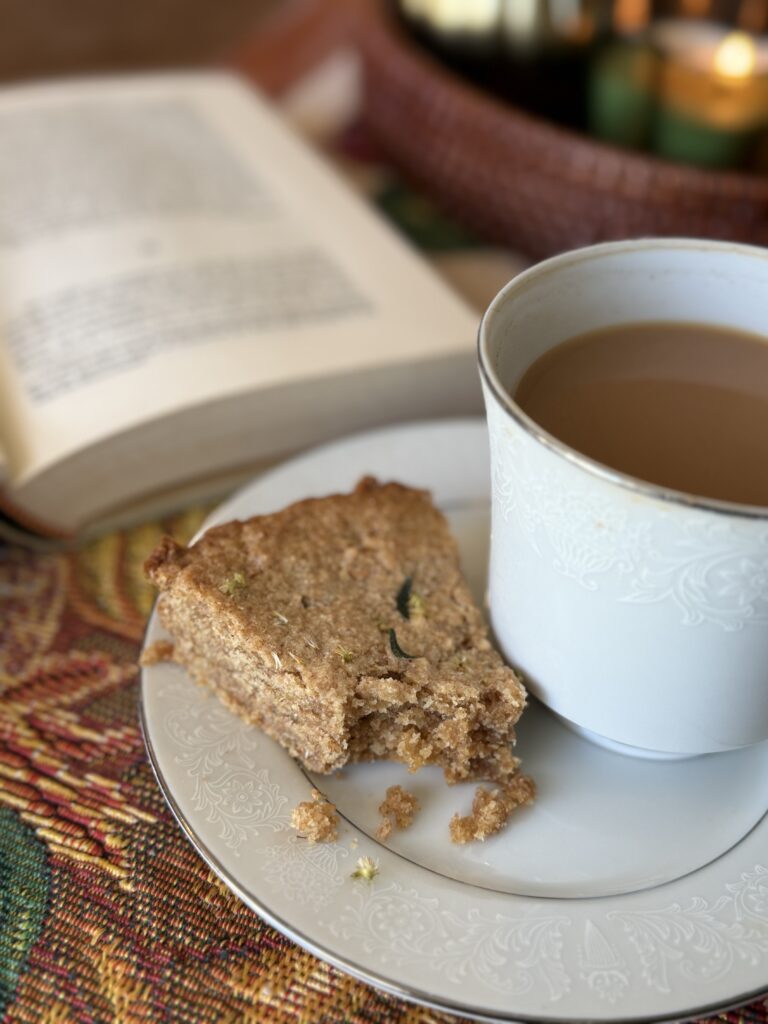
Shortbread traditionally uses granulated sugar, but I also wanted to use honey for this recipe because I wanted something tender and crumbly but also a tad moist.
What Exactly IS Shortbread?
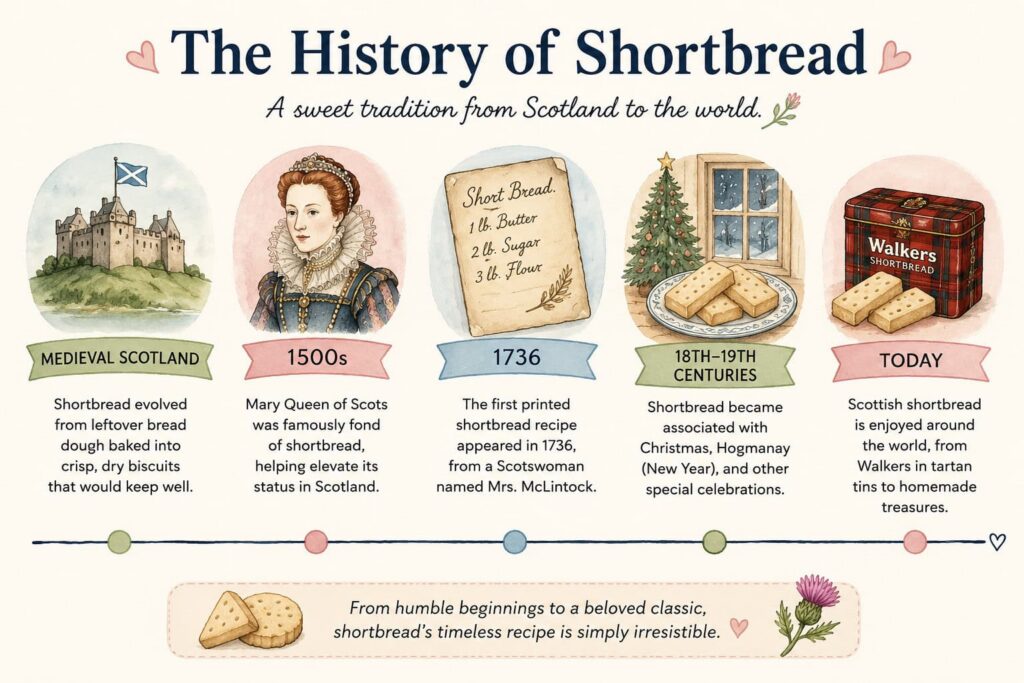
Shortbread gets its name from the word short because the word SHORT in baking typically = tender and crumbly. (Then why don’t we call stretchy gluten-y dough LONG?) The high amount of butter in shortbread limits gluten development, giving shortbread its characteristically delicate, crumbly texture. This is a quality bakers refer to as being “short.” This is also where the term shortening comes from.
Shortbread is incredibly simple to make from memory because it’s always:
1 part sweetener, two parts butter, three parts flour.
And then add in whatever flavorings you might want… So you can use this shortbread recipe I created or you can easily come up with your own!
Whenever I bake these little golden shortbread wedges, I’m reminded that provision doesn’t often look grand but it IS grand. It often arrives in jars of honey and handfuls of flour. The ordinary sings. And it’s simple enough for little hands help me make a batch.
You can leave them in their classic plain golden wedge, or you can form a simple design on the dough with a fork and add some nuts or fruit for a special occasion. ✨
(Add your designs/nuts/fruit immediately before placing pan in the oven)

Colonial Honey Shortbread
Ingredients
Method
- Preheat your oven to 325°F and line a small baking pan or pie plate with parchment.
- Cream the butter and honey together until light and smooth.
- Add flour and salt, stirring gently until a soft dough forms.
- Press the dough evenly into your pan, smoothing the top with the back of a spoon. Score into wedges with a knife (for that classic shortbread look).
- Bake 25–30 minutes, or until golden around the edges.
- Let it cool before breaking along the scored lines.
