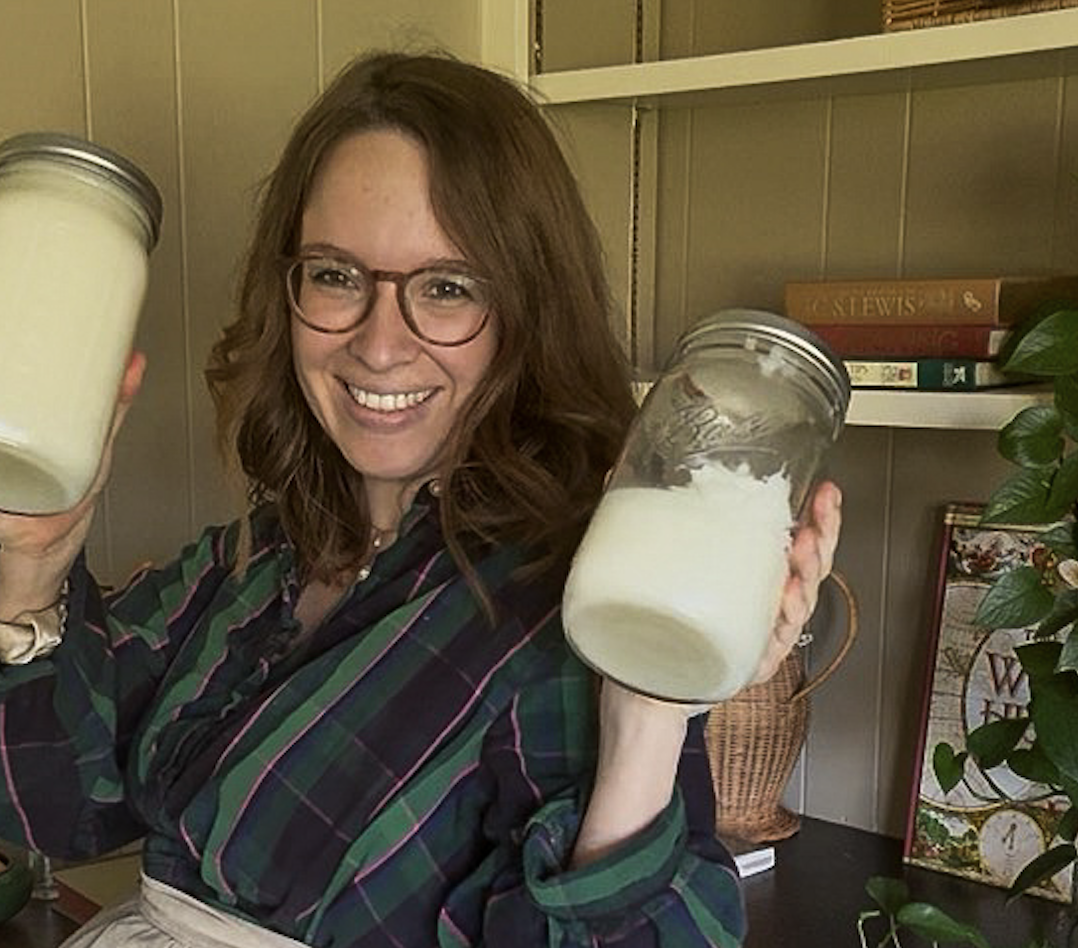
Intro
This is the Tallow/Lard Soap part of my blog series of giving you more exact soap recipes because y’all asked for them! This recipe is for tallow or lard that you either bought or rendered yourself.
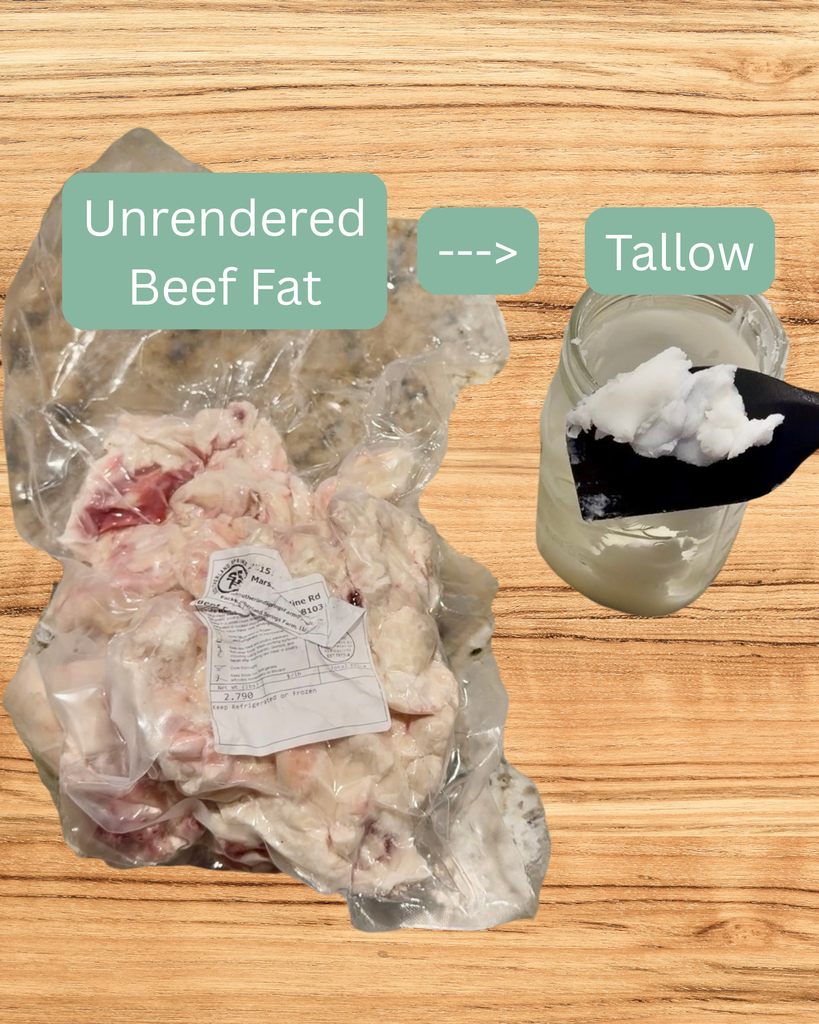
I get unrendered beef fat included in the half-cow that we buy from a local farm and I get unrendered pork fat-back from a local hog farmer. It is INCREDIBLY easy to render your own tallow and lard, I will make another post on this soon. I also have a Youtube video on how to easily render your own lard/tallow!
Simply put: Rendered beef fat = tallow and Rendered pig fat = lard
I want to be clear that I’m not here to be a soap expert. I’m here to show you that you can take steps towards soap-making and other healthy changes in your home WITHOUT being an expert. I’ve been making all of my family’s soap for 4 years with the same simple recipe and I have personally not adjusted it for different fats or oils. I’ve just been okay that my soap comes out with slightly different textures each time lol.
However, many of you wanted my help formulating your recipes for more consistent bars of soap. Here are the calculations for a bar soap made with 100% tallow or lard.
Tallow/Lard Soap
This recipe can be used with all tallow, all lard, or a mixture of both together.
Tallow (beef fat) and Lard (pig fat) react with lye and make good hard, long-lasting bars of soap with a creamy, stable lather. They are generally VERY moisturizing so a lower 1-5% superfat is a good range for 100% tallow or lard soap. Both usually reach trace fairly easily and hardens in 3-4 weeks with curing.
Tallow tends to make a slightly firmer bar, while lard can produce a particularly creamy, silky lather. But I am including them in the same post because they mostly behave fairly similarly and I use them interchangeably. They are both wonderfully simple fats for making an everyday bar of soap – my personal favorite!
Recipe for 100% Tallow/Lard Soap
Materials
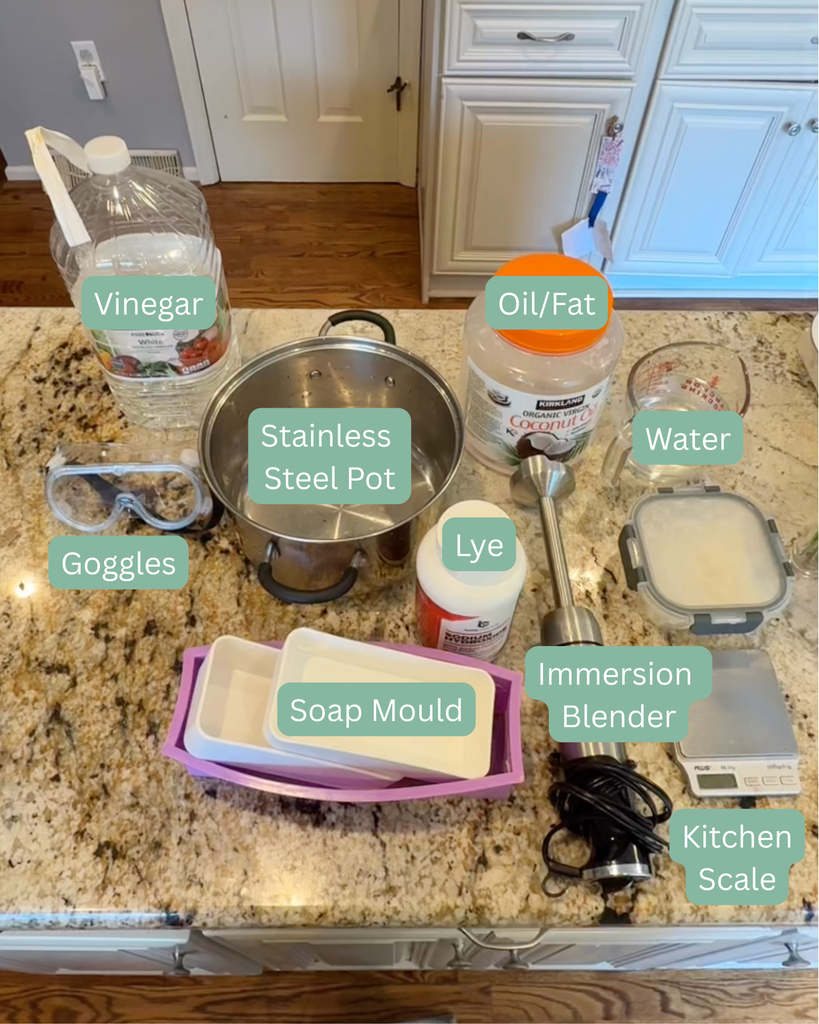
- Vinegar
- Eye protection
- Stainless steel pot or bowl
- Immersion blender
- Kitchen scale
- Soap mold
Ingredients**
- 8oz filtered water
- 22oz melted lard or tallow
- 2.92oz lye
Instructions
- Measure out and melt your lard and/or tallow
- Your fat just needs to be a liquid to pour into the soap pot
- Set your fat aside
- Pour 8oz water into pot
- Tap water is fine as long as it’s not “hard” water
- Pour 2.92oz lye into water and stir to combine
- Go slowly, *don’t put your face directly over pot, fumes can be strong*
- Pour 22oz melted fat into pot and begin immersion blending
- Keep stirring/blending until you get trace (pudding consistency)
- Pour soap mix it into soap mold
- Let cure for 1-2 weeks to solidify before cutting
- Then cure cut soap for 1-2 more weeks before using (do zap test)
If you want more expert opinions on soap making, I think https://www.ellyseveryday.com/ has a wealth of useful information.
To calculate your own soap recipe with varying ratios: https://soapcalc.net/calculator
Types of Tallow/Lard in SoapCalc.net
If you use a soap calculator, you will see several kinds of “tallow” based on the animal. This recipe is for BEEF tallow. (I have never used bear, deer, goat, or sheep tallow.. though hopefully I will some day!). You will only see one kind of lard labeled “Lard, Pig Tallow (Manteca)”. That is the same thing this recipe is using.
Links for Tools and Supplies
For your convenience, here are the links to all of the tools/supplies I personally use! If you do not want to purchase on Amazon, another option would be to check Facebook Marketplace. Often, people are getting rid of their hobby items right when you are starting, so you can buy a whole bundle of supplies for much cheaper! Worth a check.
- Pork Lard or Tallow
- Sodium Hydroxide (also called NaOH or Lye)
Happy soap making and remember, all glory to the One who created it all!
❤️ Rachel
100% Tallow or Lard Soap
Equipment
- Vinegar
- Eye protection
- Stainless steel pot or bowl
- Immersion Blender
- Kitchen scale
- Soap mold
Ingredients
- 8 oz Filtered Water
- 22 oz Lard and/or Tallow
- 2.92 oz Lye NaOH (Sodium Hydroxide)
Instructions
- Measure out and melt your lard and/or tallowYour fat just needs to be a liquid to pour into the soap pot
- Set your fat aside
- Pour 8oz water into potTap water is fine as long as it’s not “hard” water
- Pour 2.92oz lye into water and stir to combineGo slowly, *don’t put your face directly over pot, fumes can be strong*
- Pour 22oz melted fat into pot and begin immersion blending
- Keep stirring/blending until you get trace (pudding consistency)
- Pour soap mix it into soap mold
- Let cure for 1-2 weeks to solidify before cutting
- Then cure cut soap for 1-2 more weeks before using (do zap test)
Notes
- If adding flower petals or peels into soap, please ensure that they are FULLY DRY, otherwise they will mold.
- It is normal for flower petals or peels to bleed color inside the soap. This is a normal chemical reaction.
- If you want to add flower petals but don’t want them to bleed, simply sprinkle them on top of the mold after pouring in the soap.
Precations:
- Wear gloves and safety goggles.
- Work in a well-ventilated area.
- Keep children and pets away from lye and lye water.
- Always add lye to water, never water to lye.
- Avoid breathing lye fumes; don’t lean over the mixture.
- Use stainless steel, silicone, or heat-safe plastic.
- Never use aluminum.
- Avoid skin and eye contact with lye or fresh soap batter.
- Keep vinegar or other acids out of the lye-mixing process.
- Clearly label and safely store lye out of reach of children.
- If lye contacts skin, flush immediately with vinegar and then plenty of cool running water.
