I did not start looking into freshly milled flour because I wanted another kitchen project. I started because I was confused.
Everywhere I turned, it seemed like if you wanted to be healthy, bread had to be eliminated. Bread was blamed for everything! And yet when I read Scripture, or even just looked at history, bread was not a “fringe” food. It was a primary food source for families, communities, whole civilizations. So I kept wondering how something that sustained people for so long suddenly became something we were supposed to avoid.
From what we know of ancient diets, bread really was a staple for much of the world. In the ancient Near East, including Biblical cultures, bread was eaten daily and often at nearly every meal. The same was true in ancient Egypt, where bread and beer made up a large portion of caloric intake. In ancient Greece and Rome, bread was a staple across all social classes. Even throughout medieval Europe, bread was one of the main ways people got their daily calories. Meat was more occasional for many households, especially outside of wealthier classes. Bread, grains, and legumes carried the weight of nourishment for most people.
So the question that kept bothering me was this. If bread sustained people for generations, what changed?
That question is what led me to the work of Sue Becker and her book The Essential Home-Ground Flour Book. Her book helped me connect what felt like scattered pieces into something that made sense.
What Flour Used to Be
A wheat kernel, or wheat berry, is actually a seed. And like any seed, it is designed to contain everything needed to grow a new plant. It has three main parts. The bran, which is the outer layer and is rich in fiber and minerals. The germ, which is the embryo of the plant and contains healthy fats, vitamin E, and B vitamins. And the endosperm, which is mostly starch and a small amount of protein.
When people historically made flour, they crushed the entire grain. Nothing was removed. Flour was “whole wheat” by default.
There was also a rhythm to it. Flour was not meant to sit on a shelf for months. Once the grain is milled, the oils in the germ begin to oxidize and nutrients begin to degrade. So there was often a local town miller, and families would bring grain regularly, sometimes multiple times a week, to have it freshly ground. Bread was made from flour that was ALIVE, in a sense. It had not been sitting in a warehouse or on a grocery shelf for an extended period of time. It had been milled within days of baking with it.
What Changed in the Early 1900s
In the late 1800s and early 1900s, industrial milling changed everything…
New roller milling technology made it possible to separate the parts of the wheat kernel. Companies began removing the bran and the germ, leaving only the endosperm. This created a very fine, white flour that had a much longer shelf life because the oils that would go rancid had been removed.
From a business standpoint, this made sense. Flour could now be stored, transported long distances, and sold months after milling. But nutritionally, most of the significant calories were lost.
According to historical and nutrition research summarized by Sue Becker and supported by sources like the Whole Grains Council, removing the bran and germ strips away a large portion of fiber, essential fatty acids, vitamin E, and many B vitamins. What remains is mostly starch.
Bread had been a major source of nutrients for the general population. When those nutrients were removed, people did not just adjust automatically. Deficiency diseases began to appear more frequently, including conditions linked to lack of B vitamins.
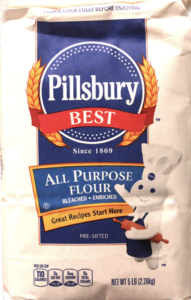
There is a fascinating piece of history during wartime, particularly around World War I, when concerns about food supply and nutrition became more urgent. Reports noted that a significant portion of the grain, roughly one third, was being discarded during milling. The government pushed for more complete use of the grain, and flour extraction rates increased, meaning more of the whole kernel was included again. During this period, rates of certain deficiency diseases declined, which reinforced the connection between whole grain consumption and nutritional health. This is also part of what eventually led to “enrichment programs”, where synthetic vitamins were added back into white flour to compensate for what had been removed.
But enrichment is not the same as the original. It replaces a handful of nutrients synthetically, not the full complexity of what was there to begin with. (How God made it…).
The Science Behind Freshly Milled Flour
One of the things that stood out to me from Sue Becker is the idea that flour is a living food, at least in the sense that it is at its most nutritionally complete right after milling.
Freshly milled flour contains intact oils, enzymes, and a full spectrum of nutrients. Over time, especially once exposed to air, those begin to degrade. This is why commercially milled flour is designed to be shelf stable, but at the cost of removing the parts that would make it spoil.
There is also a difference in how the body processes whole grain flour compared to refined flour. Whole grain flour, with its fiber and fat intact, tends to digest more slowly and has a different impact on blood sugar than refined white flour. Organizations like the Harvard T.H. Chan School of Public Health have published research showing that whole grains are associated with better metabolic health outcomes compared to refined grains.
But keep in mind, there is a big difference between “whole grains” sold in the stores today and TRUELY using the full whole grain (by using freshly milled flour). Remember, when you mill the true whole grain, it is not shelf stable. It will go rancid on the grocery store shelf. So in order to make the “whole grain” flour or bread on the shelves at the store, they sift the bran, germ, and oils out of the flour like they normally would, and then they simply add back in the bran (but the germ and nutrient-dense oils are still gone). This makes store-bought whole grain flour look browner and more “natural”, but it is still missing the most nutrient dense portion. It is not truly “the whole grain” (and I’m not quite sure how they get away with that from a marketing perspective).
Why This Mattered for My Family
This was honestly such good news for me.
I love bread. My kids love bread. And if I am being real, children tend to gravitate toward carbohydrate-rich foods. There is actually some physiological reasoning behind that. Carbohydrates are the body’s most efficient source of quick energy, and growing children have high energy needs. Their brains also rely heavily on glucose. Research in pediatric nutrition shows that children often prefer carbohydrate-rich foods because they are energy dense and readily usable.
Of course, that can be shaped by environment and habits too. Processed carbs and sugar absolutely train the palate in a certain direction. But the basic inclination toward carbs is not completely misplaced. It just needs to be paired with real, nutrient-dense sources. So instead of fighting against that, freshly milled flour felt like a way to work with it.
I did not have to remove bread! I could just make it better. I could take something my family already loved and turn it into something that actually nourished them in a meaningful way, more like it did for generations before us.
How to Start (Without Overcomplicating It)
If you are feeling interested but also slightly overwhelmed, I understand that. I felt the same way at first. But the actual barrier to entry is simpler than it seems.
You need two things: A grain mill and whole grains.
You need two things: A grain mill and whole grains.
A good mill is an investment, but it is one that can last for decades if you take care of it. I personally found mine through Pleasant Hill Grain. When buying a grain mill new, it is typical that they will be sold out. The grain-milling community is quite small, and the companies that make mills usually make them sparingly. Simply check out using the “pre-order” option and it will typically ship within the next few weeks. Pleasant Hill Grain will notify you directly before your order ships and before your card is charged. (You can also always be on the lookout on your local Facebook Marketplace while you wait!)
For grain, I have consistently used Azure Standard. They have the cheapest prices on organic grain. However, I have also purchased from Palouse and Grand Teton Ancient Grains.
If you are just starting, I would recommend beginning with hard white wheat. It has a milder flavor and behaves in a way that is more familiar if you are used to baking with store bought flour.
If you are curious about ancient grains, spelt is a good place to start. It tends to be more forgiving than einkorn and is certainly more affordable.
And this might sound surprising, but I do not recommend starting with bread.
I know a loaf bread feels like the goal, but it is also the thing that requires the most learning. If you start there and it flops, it can feel discouraging.
Start with pasta, muffins, cookies, pancakes, crackers, flatbreads. Not bread loaves.
Start with things that are hard to mess up. Pasta, muffins, cookies, pancakes, crackers, flatbreads. These do not rely as heavily on gluten development or perfect fermentation. You will get a feel for how freshly milled flour behaves without the pressure of trying to get a perfect loaf.
Once that feels comfortable, then move into bread! By then, it will feel much more doable and be more a part of your daily rhythm.
Quick Guide to Common Grains
Here is a quick overview to help you get your bearings.
Hard white wheat
This is a great everyday wheat. It has a mild flavor and strong gluten, which makes it ideal for bread but also flexible enough for other baked goods.
Hard red wheat
This has a more robust, slightly nutty flavor. It also has strong gluten and works well for hearty breads.
Soft white wheat
Lower in protein and gluten. This is better for pastries, cakes, biscuits, and anything where you want a softer texture.
Spelt
An ancient grain with a more delicate gluten structure. It is often easier for some people to digest, though it still contains gluten. Good for bread, muffins, and pancakes.
Einkorn
Another ancient grain, but with very weak gluten. It behaves very differently in baking and takes practice. Some people with sensitivities find it easier to tolerate.
Kamut (Khorasan wheat)
Larger grains with a rich, buttery flavor. Moderate gluten. Good for bread and pasta. Some people find it easier on digestion than modern wheat.
Durum
Very hard wheat used primarily for pasta. High protein but different gluten characteristics than bread wheat.
Final Thoughts
If you are standing at the beginning of this, wondering if it is worth it, I would just say this: You do not have to overhaul everything overnight. You do not have to become an expert baker immediately.
You are just learning how to bring one traditional practice back into your home.
For me, it started with a question about bread and health. It ended with a completely different understanding of what flour is, what it used to be, and what it can be again in my own kitchen. And once you taste bread made from freshly milled flour, it is hard to go back!
Happy Baking! Let me know if you have any questions in the comments below,