Intro
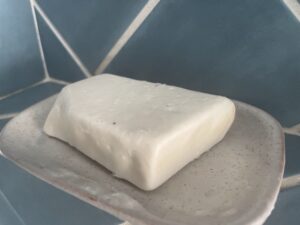
Making your own liquid Castile soap at home is actually so simple. This easy homemade liquid soap recipe uses just three ingredients: olive oil, potassium hydroxide (KOH), and water. Once the soap paste is made, you can dilute it into liquid soap for everyday use around the home.
In this guide, I’ll walk you through the ingredients and equipment, how to make the soap paste, how to dilute it, and how to calculate the cost of your own batch. I’ll also share my dilution chart and a few things I’ve learned over the years.
Important safety note: This recipe uses potassium hydroxide, a caustic chemical that can cause serious burns. There is no need to fret, working with it is very simple and safe as long as you take a few simple precautions! Wear chemical-resistant gloves and splash goggles, work with good ventilation, and keep children and pets away from the workspace. Follow appropriate lye-handling and emergency guidance throughout the process.
Why I Make My Family’s Soap
I didn’t intend for my simple soap making blog post to get political, I don’t consider myself a political person, but in my opinion this isn’t a political topic; it’s just a human topic. And this is my blog, so I’ll write what I want for anyone who wants to read it. If not, simply skip down to the recipe. 😊
I was initially drawn to make my own Castile soap because one day I started reading the label on the bottle of the big brand Castile soap (you know the one I’m talking about, let’s call it “Dr. Gronner’s”), and I realized it said some pretty sketchy and concerning things… Things that did not align with my Christian values, but also that just seemed like straight up witchcraft. (Don’t take my word for it, you can read it yourself online although I wouldn’t necessarily recommend it).
Additionally, I learned that this company donates to other large companies that, in my opinion, could never be a justifiable place to dontate money (such as Planned Parenthood, due to the unaliving of small humans). Yet, this same $400 million dollar castile soap company has no records of donating to any crisis pregnancy and women’s centers (where women can go for free health screenings, free ultrasounds, and several other free resources before, during, and after pregnancy). As a nurse I have volunteered at mulitiple crisis pregnancy centers where an OBGYN, ultrasound technicians, licensed therapists, etc. are on site to provide free care for any woman who comes in, but these centers are chronically underfunded. Where are the billion dollar company donations to these local centers?
Anyways, I wildly digress for the sake of speaking on a topic that is important to me, as the child of a 15-year old single teenaged mom myself. (Although I think it’s a relevant topic for anybody who identifies as homo sapien).
Another reason I make my family’s Castile soap myself now is simply because it’s so cheap! It costs about $10-13 per gallon to make this recipe but between $35-$60 to buy 1 gallon of Castile soap at the store. So, that’s easy math of course.
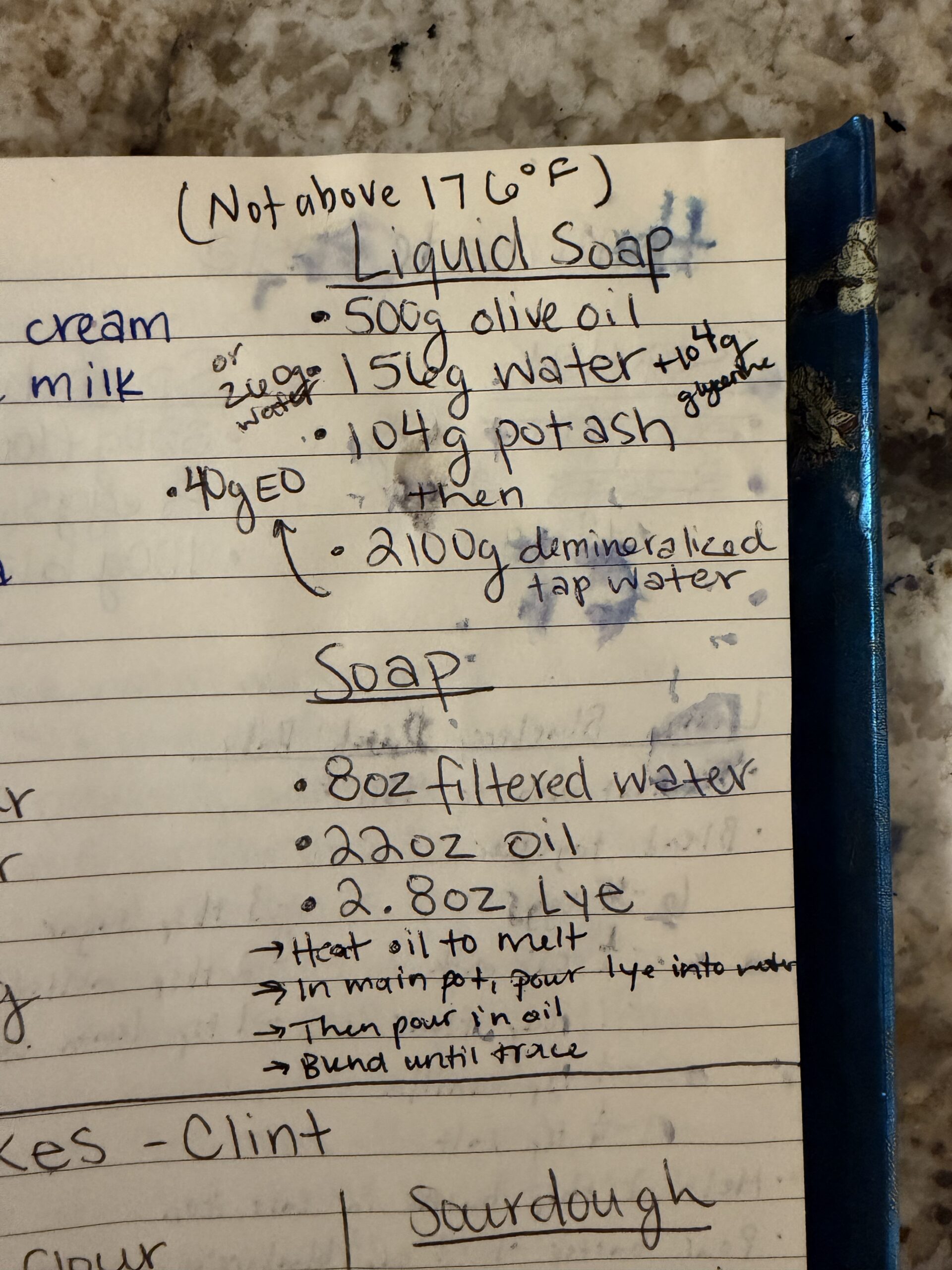
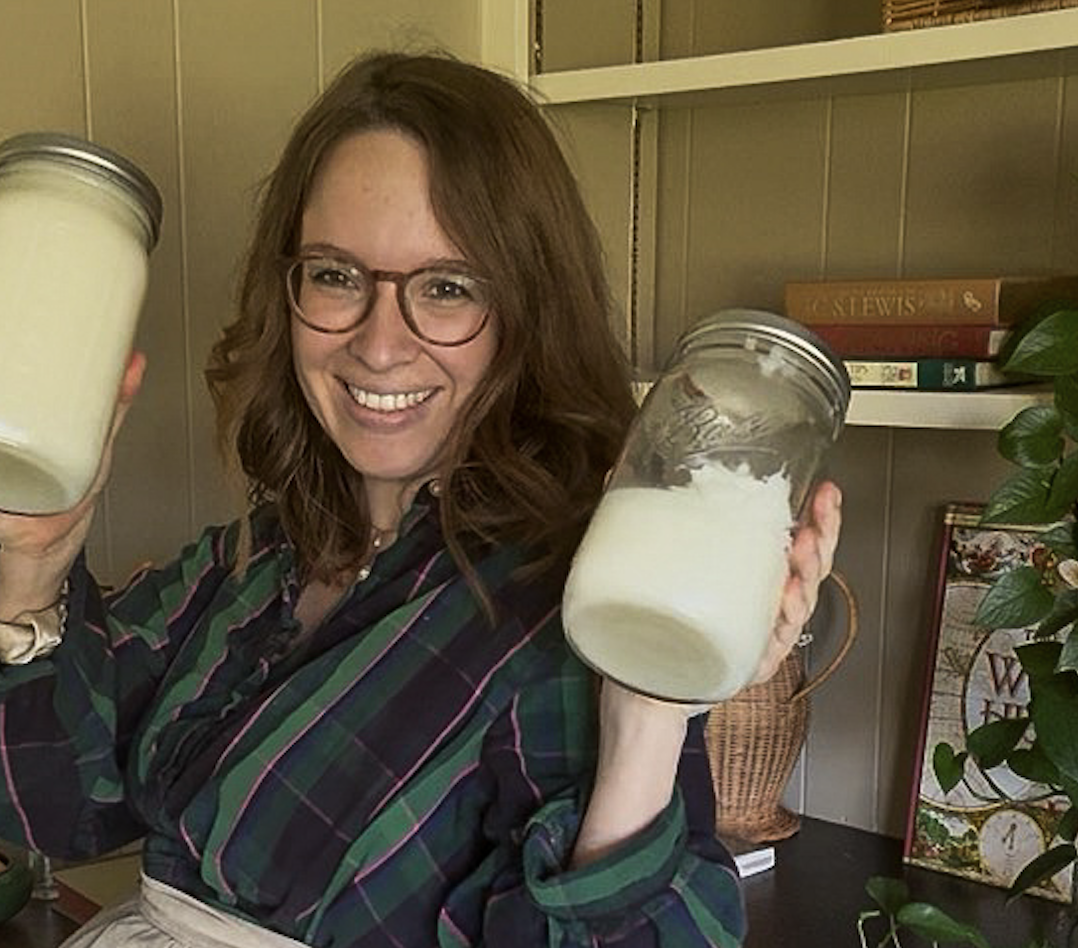
If you are coming from my bar soap post, then you know how much I prioritize EASY recipes. If it is not a recipe I can easily memorize and recreate from memory, then I probably would not do it. I have a husband, 4 kids 6-years old and younger, chickens, a giant garden, fruit trees, a church small group, homeschooling, a part-time job, and laundry to take care of… When I have 10 minutes to be in the kitchen alone, I need to have a soap recipe that is quick and simple to whip up.
This is the most basic, fragrance-free, classic Castile Soap recipe. I cannot remember where I got this recipe, but I have been using it for almost 5 years and it’s been great. No frills or scents or preservatives. Just how I like it! (If you want to add fragrance to your soap, I will be adding a post on that soon, but I prefer unscented).
Without further adieu, here is the recipe!
RECIPE: 3-Ingredient Castile Soap
Materials:
- Vinegar for neutralizing potash/lye spills
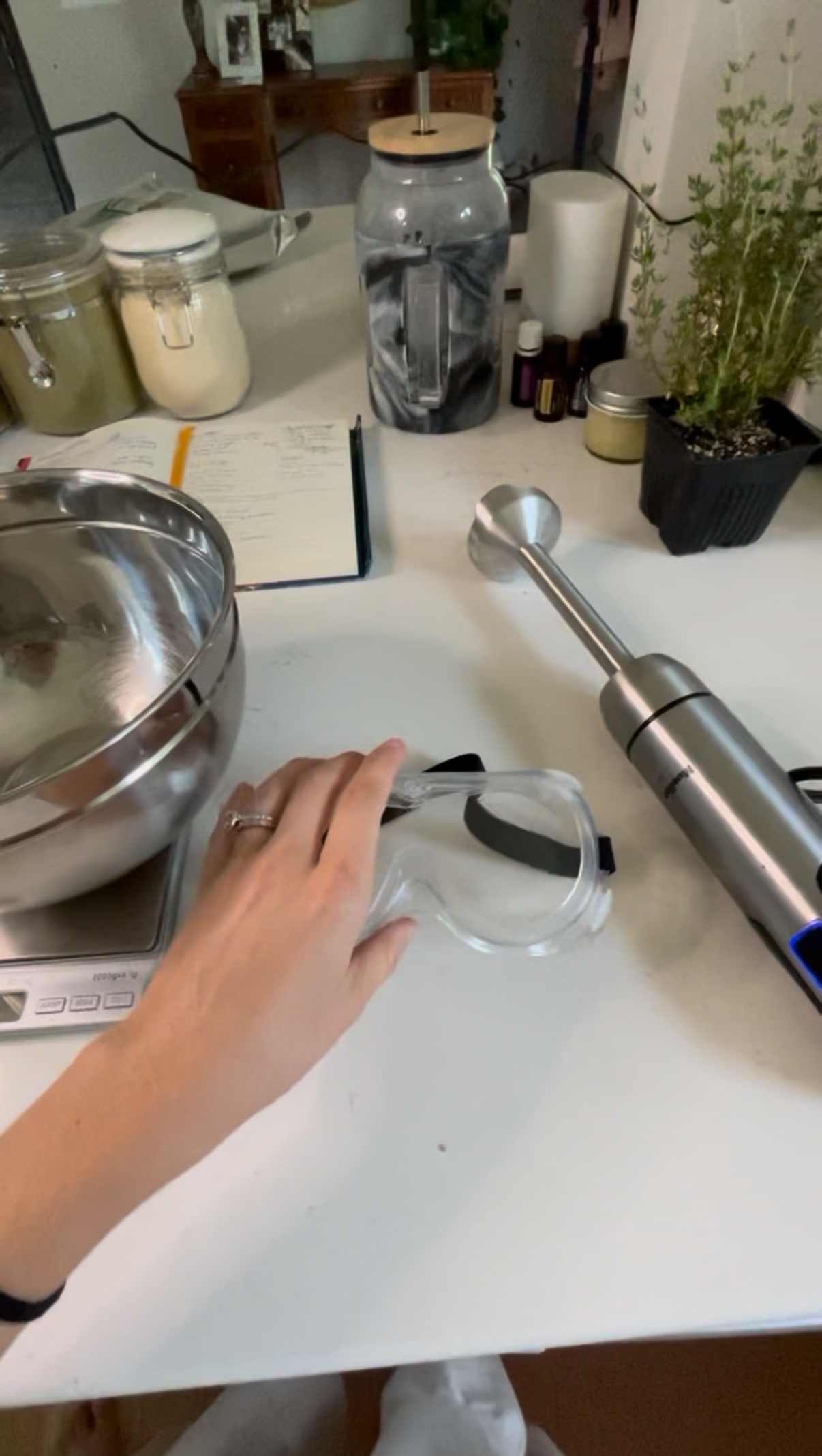
- Eye protection
- Enamel Slow Cooker
- or Stainless steel pot or bowl
- Immersion blender
- Kitchen scale
- Mason jar or soap dispener
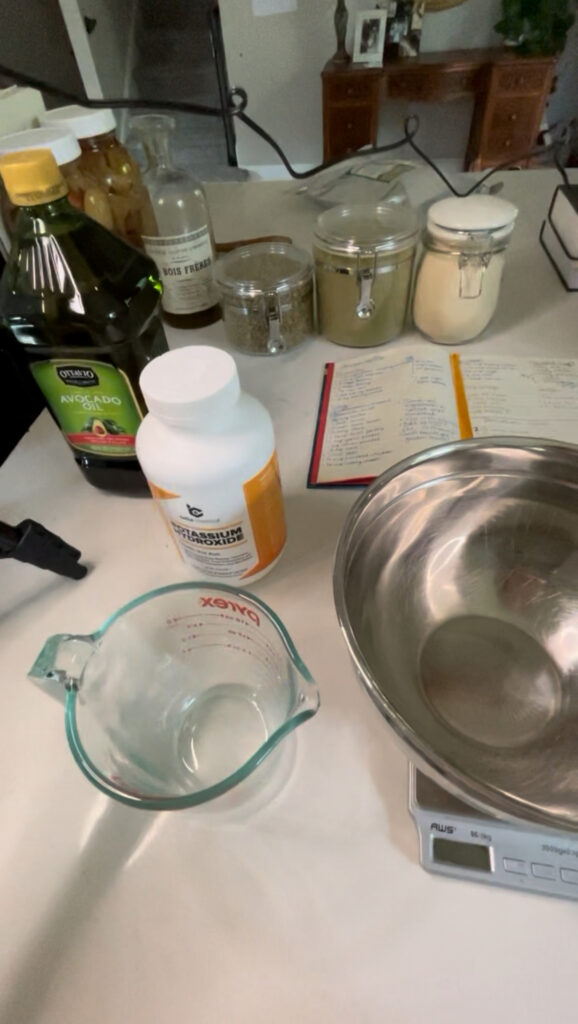
Ingredients:
- 500g olive oil
- 260g water
- 104g potassium hydroxide (potash)
- To dilute: 2100g (2.1 litres)
Method:
- Measure 500g olive oil
- Pour olive oil into slow cooker or stainless steel pot
- Turn the cooker up to warm to heat the oil.
- (It should not exceed 176°F, but don’t worry that would take a while)
- Weigh out 260g water in a separate heat-tolerant jug or bowl with spout
- Tap water is fine as long as it’s not “hard” water.
- Weigh 104g potassium hydroxide into a small container
- Slowly pour the potassium hydroxide into the water, stirring to dissolve. It should turn clear.
- Wear eye protection and be careful not to splash! If you get any on your skin, rinse in cold water for 15 minutes.
- Then slowly pour potassium hydroxide/water solution into olive oil.
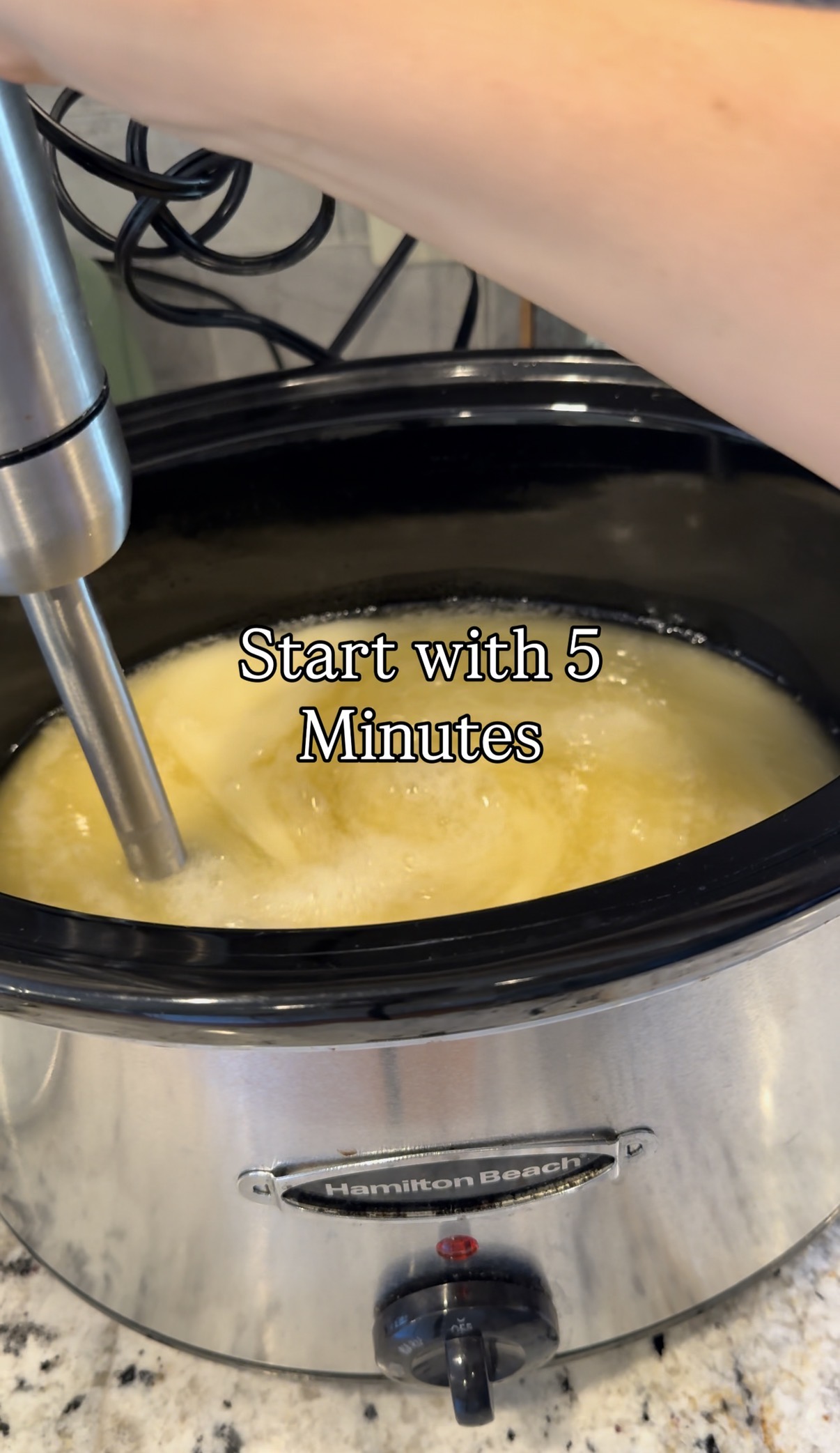
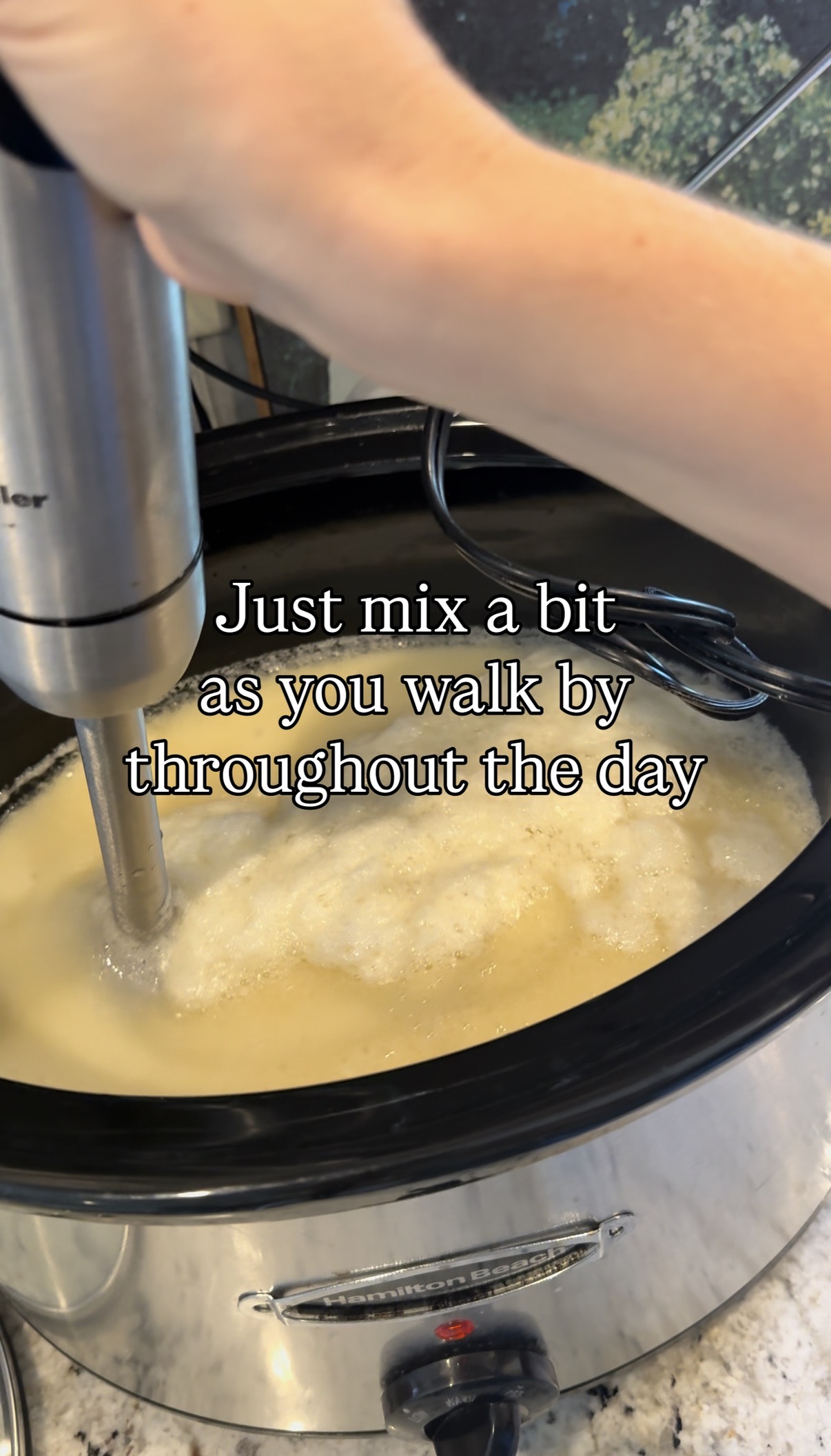
- Mix with immersion blender for 5-10 minutes.
- Be very careful to keep the blades of your blender under the soap surface to avoid splashing.
- Remove immersion blender, place lid on pot, turn to “keep warm”
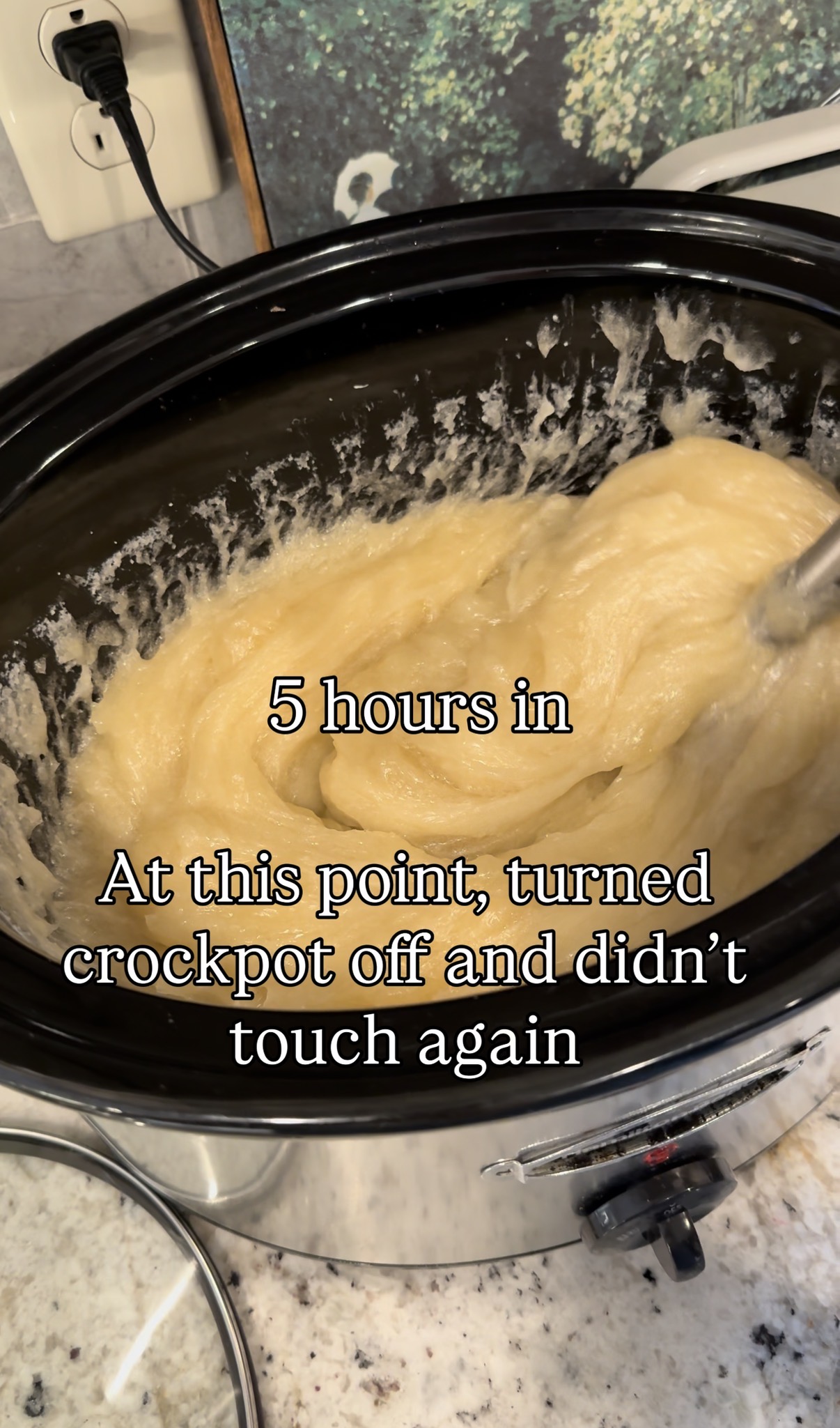
- As you walk by throughout the day, blend or manually stir on and off for 5-10 minutes until it’s thick and glossy – this will take all day/overnight
- Before you go to bed, turn the slow cooker off and just let your soap paste continue to thicken while covered.
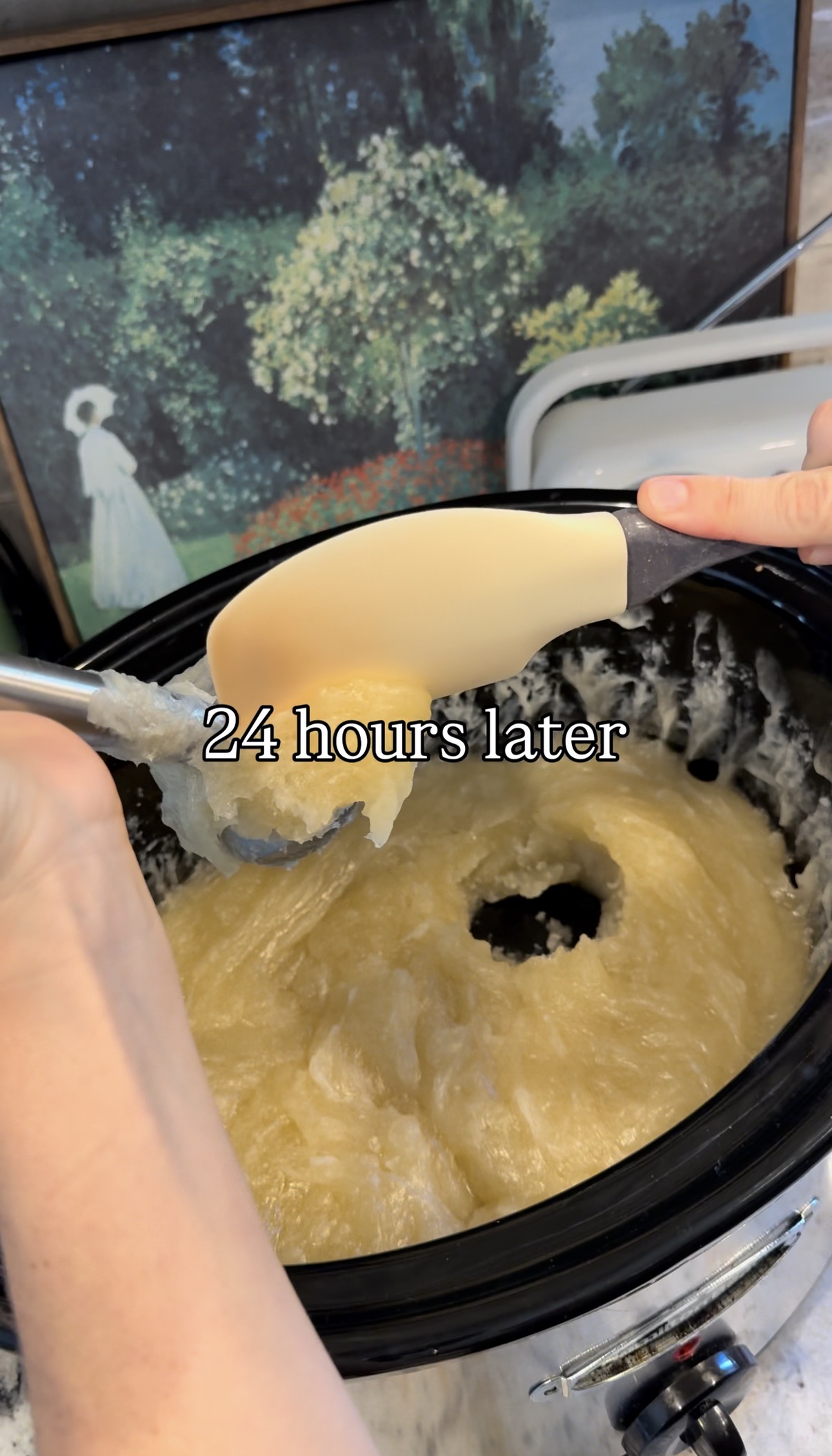
- By 24 hours it should be ready. Do a clarity test to be sure.
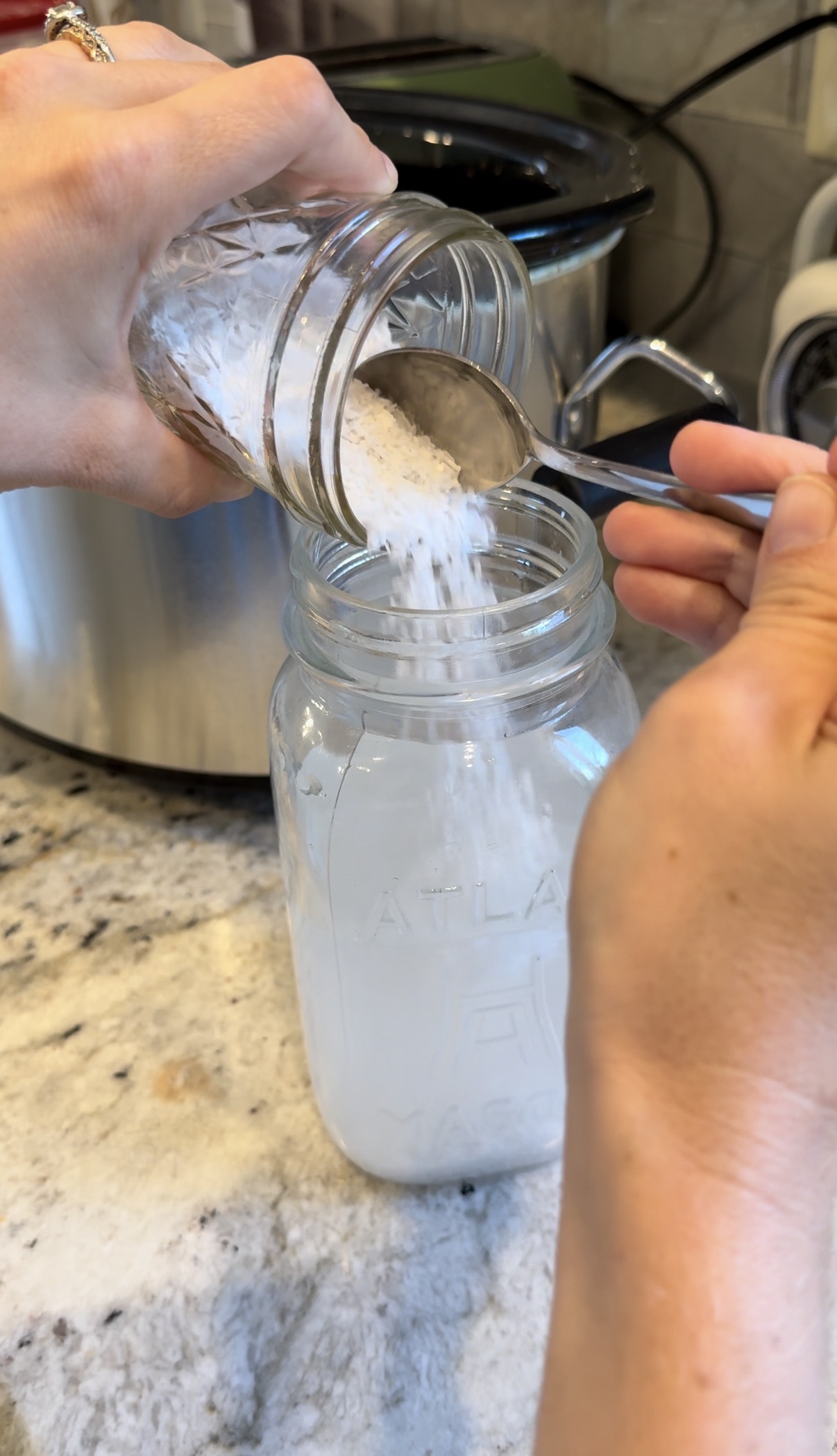
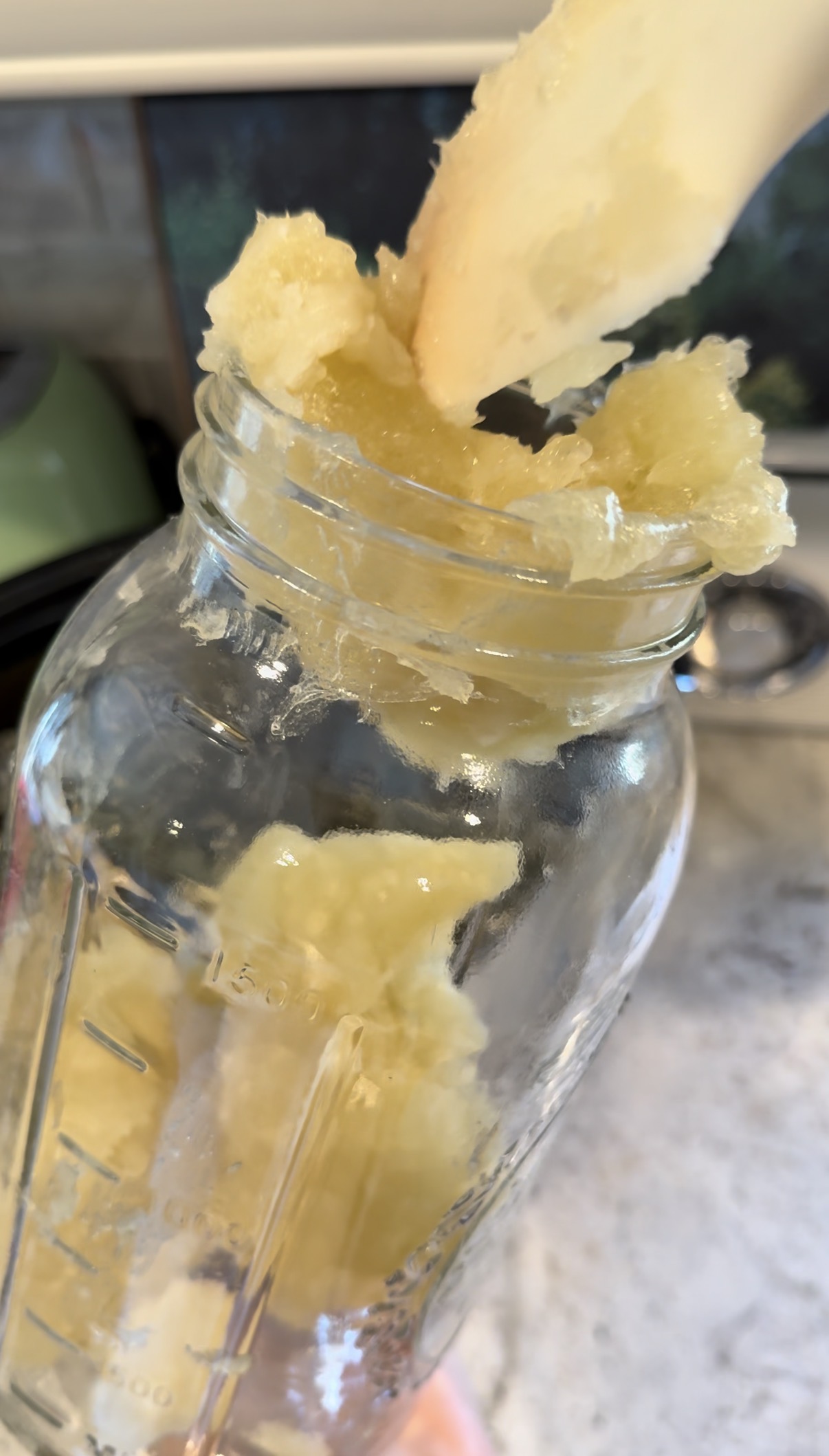
- Save some soap as paste in a mason jar, dilute the other half for immediate use using dilution ratio of 1:2 by weight (1 part soap paste, 2 parts water)
Screenshot
Screenshot
Screenshot
Screenshot
Screenshot
Screenshot
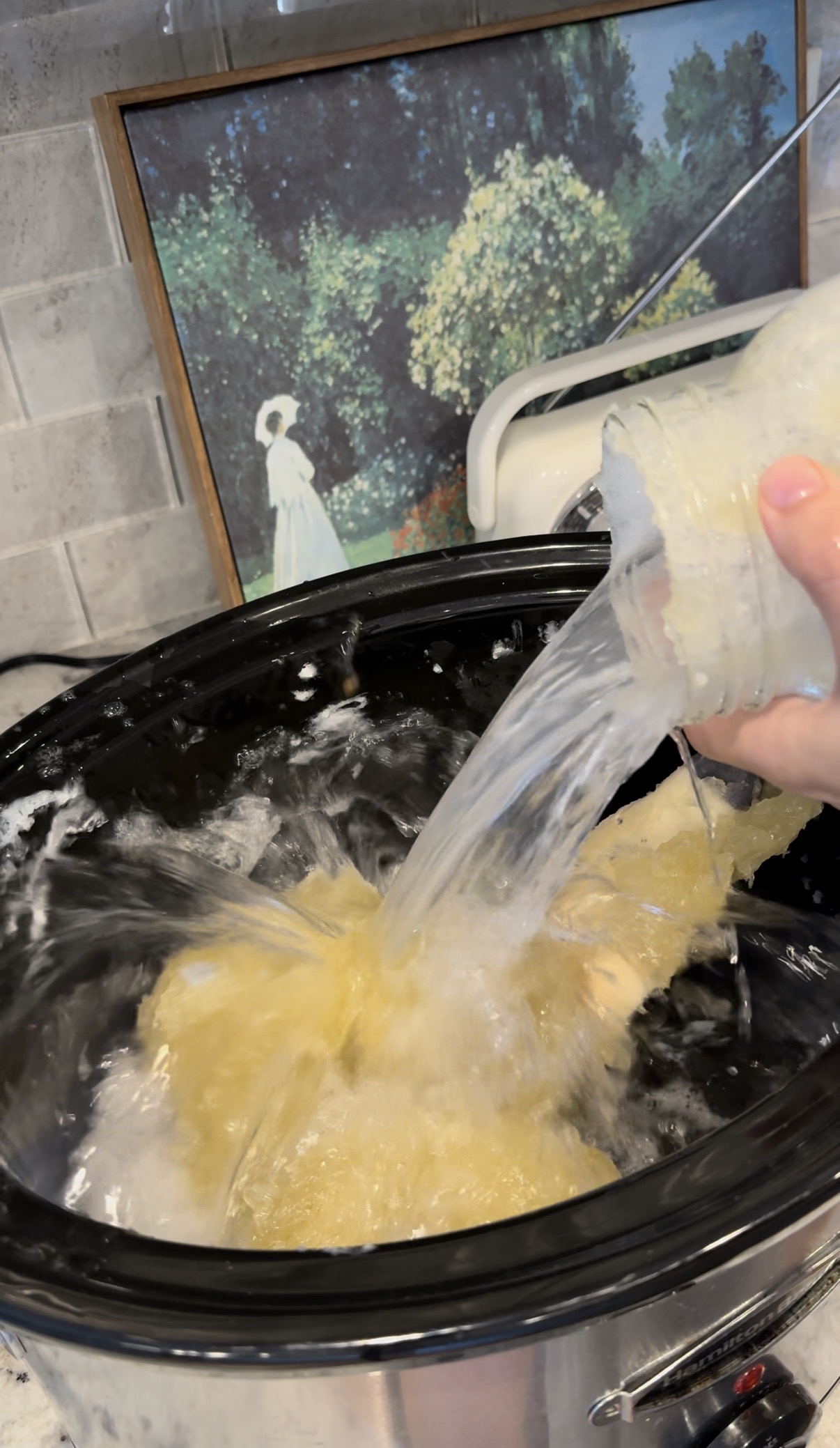
Screenshot
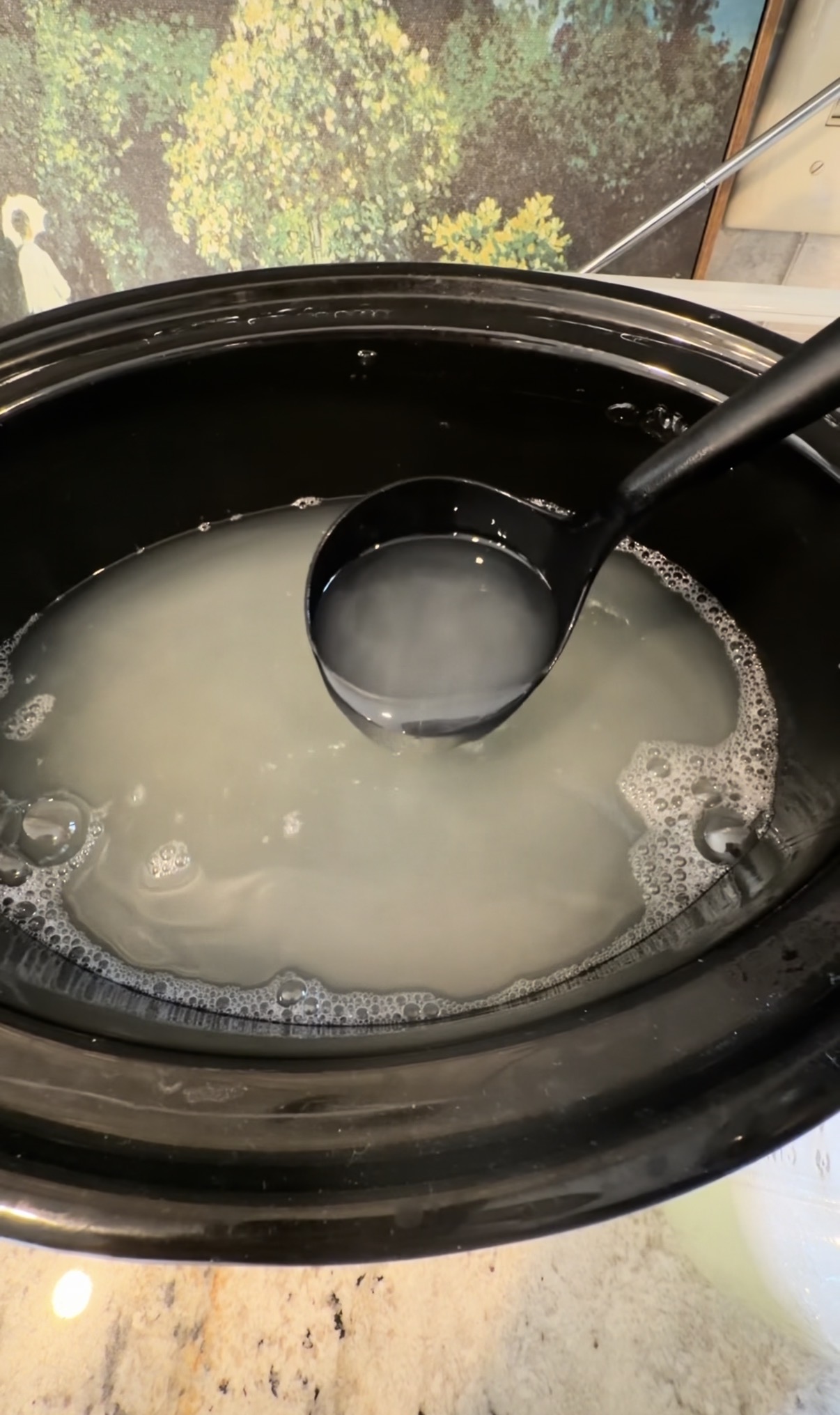
Screenshot
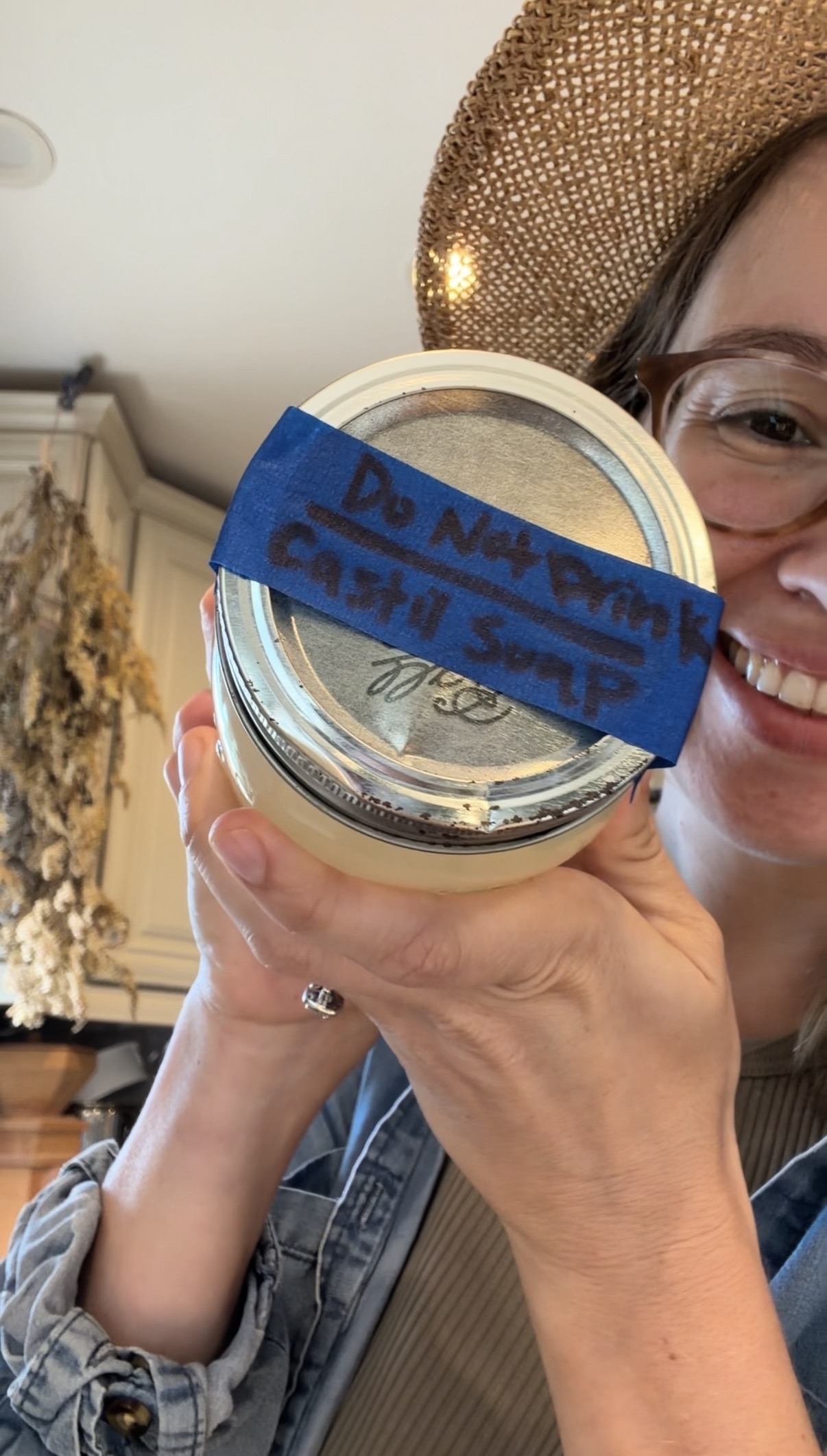
Screenshot
Note: Some people add glycerin but it’s not necessary
Some people prefer to add glycerin to their recipe for additional moisterizing effects and quicker curing time. It’s not needed but you can definitely add it if you want! To add glycerine, the recipe is:
- 500g olive oil
- 156g water
- 104g glycerine
- 104g potash
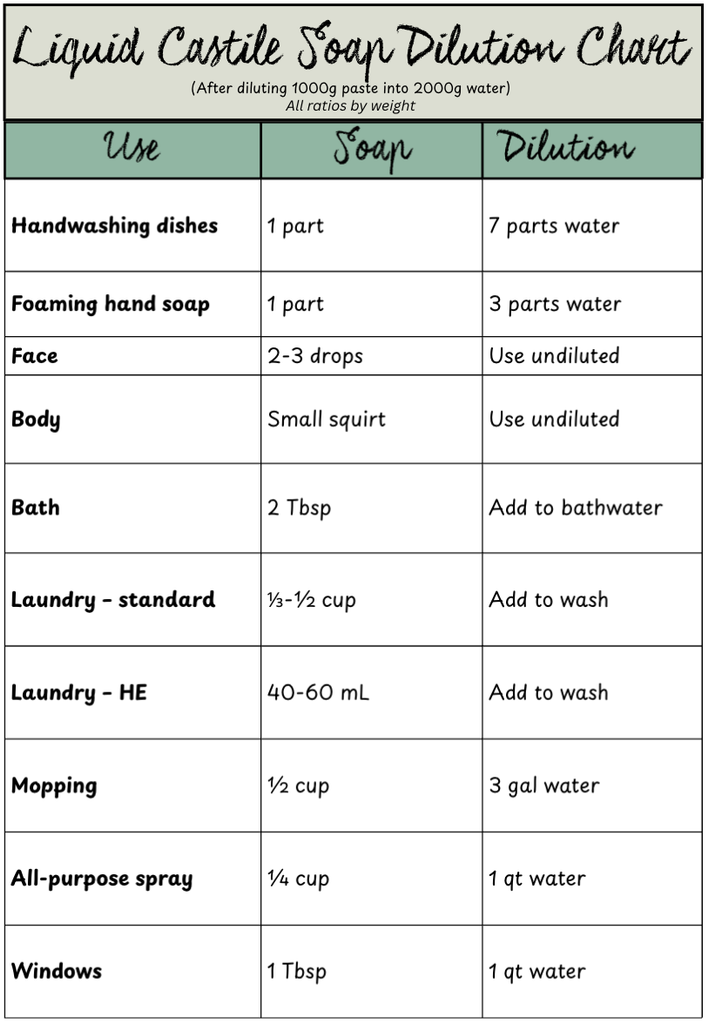
Dilution Chart for Castile Soap
If you dilute your soap paste at a 1:2 ratio with water (by weight), you will end up with a Castile soap concentration that basically matches the big name-brand Castile soaps. So, you can generally use their dilution suggestions. Here is how I dilute my Castile soap for different uses:
What is Pot Ash?
Pot ash is the traditional name for a potassium-rich substance made by burning wood and collecting the resulting ash. Historically, people poured water through wood ash to extract its soluble alkaline compounds, creating a caustic solution called lye.
Through further processing, this solution could be concentrated and converted into potassium hydroxide (KOH), which was used to make soft and liquid soaps. Today, potassium hydroxide is manufactured commercially rather than produced from wood ash. Although, with enough time, grit, and will – you could potentially make your own KOH from wood ash at home! I haven’t tried it yet, but I hope to one day.
The Legend of Soap’s Discovery
According to a popular legend, soap was discovered by accident on Mount Sapo, a supposed sacred site where animals were sacrificed by burning. As rain washed the animal fat and wood ash down the mountainside and into a nearby river, the two combined to form a crude soap! Women washing clothes in the river noticed that their laundry always got cleaner at the base of the mountain, and so the discovery of soap was born!

I’ve always thought this legend was wild in how it parallels God’s design for salvation. In the Old Testament, people would have to sacrifice an animal to be cleansed from their sins. Then to find out, in fact, that same process didn’t just clean their souls but it also cleansed their physical bodies as well! Then, after Jesus comes, we learn that the blood of the ultimate sacrifice, Jesus Christ, doesn’t just cover our sins temporarily, but washes us clean once and for all. Isn’t that so cool? It’s the gospel!
Links for Tools and Supplies
For your convenience, here are the links to all of the tools/supplies I personally use! If you do not want to purchase on Amazon, another option would be to check Facebook Marketplace. Often, people are getting rid of their hobby items right when you are starting, so you can buy a whole bundle of supplies for much cheaper! Worth a check.
- Vinegar
- Eye protection
- Enamel Slow Cooker
- Immersion blender
- Kitchen scale
- Mason jar or soap dispenser
- Olive oil
- Potassium Hydroxide
- Optional: glycerin
Cost Breakdown to Make Your Own Soap
Like I said above, cost was a big factor in deciding to make our own soap. So here’s an approximate cost breakdown:
- Olive Oil: $1.17 per 100 grams
- Potassium Hydroxide: $4.19 per 100 grams
- Water: $0.02 per 100 grams
So with the recipe above, and assuming you dilute your soap paste with 2100g water, it comes out to:
Cost per 100 g of finished soap = approximately $0.36
In other words, DIY Castile soap costs about $13.50 per gallon, while Dr. “Gronner’s” costs about $60 per gallon.
FAQs
- Can I use sodium hydroxide instead of potassium hydroxide?
- Nope! Not if you want liquid soap. Potassium hydroxide (KOH) is used to make softer soap paste that dissolves more easily in water. Sodium hydroxide (NaOH) is typically used to make hard bars of soap. They are not interchangeable in a recipe.
- How do I know when my liquid soap paste is ready?
- The paste should be thick and translucent. To check it, dissolve a small sample in hot water. The diluted soap should become mostly clear, without many oily droplets or a layer of separated oil.
- How much water do I add to liquid soap paste?
- It depends on how concentrated you want your finished soap. Start with a small amount of hot water, mix it into the paste, and add more gradually until you reach your desired consistency. For my recipe, I use a 1:2 ratio of soap paste to water by weight, then adjust as needed.
- Why is my homemade Castile soap cloudy?
- Cloudiness can happen for several reasons, including hard water minerals, temperature changes, excess oils, or just the natural properties of the soap! Try using distilled water for dilution. If the soap separates into oily layers, however, that means that the top fatty layer is unsaponified fat. Put the mixture back in your slow cooker or pot, re-blend it, and heat at a low temperature for longer until you reach paste consistency.
- Can I use homemade Castile soap as hand soap or dish soap?
- Yes! Properly made and diluted liquid Castile soap can be used as hand soap and for washing dishes. However, just be aware that it may leave residue in hard water sometimes and avoid using it in automatic dishwashers. (NO dishwasher detergents are actually soap, it is a mixture of enzymes and bleaching agents.)
- How much does homemade liquid Castile soap cost per gallon?
- It ranges by how much your ingredients cost but I’ve calculated between $10-13 per gallon.
Wait I have more questions about making soap
There are a bunch of nuanced things about making soap that you can totally learn! This is a very beginner-friendly entry set of instructions so that anyone who wants to begin soap-making (but feels like it’s too complicated) can jump in and start. Go ahead and make a batch and learn more as you go! Just start.
If you have more questions, I am still building all of the resources on this website. But I think https://www.ellyseveryday.com/ is a really great resource!
There’s also a comment section below if you have more questions, I read every one.
Happy soap making, you are so loved! And as always, all glory to the One who created it all!
❤️Rachel
Precautions:
- Wear gloves and safety goggles.
- Work in a well-ventilated area.
- I like to work near my kitchen skin for quick access to running water
- Keep children and pets away from lye and lye water.
- Always add lye to water, never water to lye.
- Avoid breathing lye fumes; don’t lean over the mixture.
- Use stainless steel, silicone, or heat-safe plastic.
- Never use aluminum.
- Avoid skin and eye contact with lye or fresh soap batter. If skin contact occurs, rinse with cold water for 15-minutes.
- Keep vinegar or other acids out of the lye-mixing process. It is for neutralizing spills only.
- Clearly label and safely store lye out of reach of children.
- If lye contacts skin, flush immediately with plenty of cool running water.
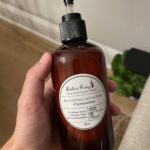
Easy Castile Soap (Fragrance Free)
Equipment
- Vinegar for neutalizing potash/lye spills
- Eye protection
- Slow Cooker or Stainless Steel Pot
- Immersion Blender
- Kitchen scale
- Bottles/Mason Jars for storing
- Gloves
Ingredients
- 500 g Olive Oil
- 260 g Water
- 104 g Potassium Hydroxide (pot ash)
Instructions
- Measure 500g olive oil
- Pour olive oil into slow cooker or stainless steel pot
- Turn the cooker up to warm to heat the oil.(It should not exceed 176°F, but don't worry that would take a while)
- Weigh out 260g water in a separate heat-tolerant jug or bowl with spoutTap water is fine if it's not "hard water", otherwise use distilled water to be safe
- Weigh 104g potassium hydroxide into a small container
- Slowly pour the potassium hydroxide into the water, stirring to dissolve. It should turn clear.Wear eye protection and be careful not to splash! If you get any on your skin, rinse in cold water for 15 minutes.
- Then slowly pour potassium hydroxide/water solution into olive oil.
- Mix with immersion blender for 5-10 minutes.Be very careful to keep the blades of your blender under the soap surface to avoid splashing.
- Remove immersion blender, place lid on pot, turn to “keep warm”
- As you walk by throughout the day, blend or manually stir on and off for 5-10 minutes until it’s thick and glossy – this will take all day/overnight
- Before you go to bed, turn the slow cooker off and just let your soap paste continue to thicken while covered.
- By 24 hours it should be ready. Do a clarity test to be sure.
- Save some soap as paste in a mason jar, dilute the other half for immediate use using dilution ratio of 1:2 (1 part soap paste, 2 parts water)