What is Hard Water?
Hard water contains high levels of dissolved minerals, particularly calcium and magnesium. Hard water is common in Well Water, but can also come from city water. It is caused by “natural filtration”, which is when rainwater picks up carbon dioxide, which causes the water to become slightly acidic. Now that the water is acidic, as it flows through soil and rocks like limestone, chalk, or gypsum, it dissolves and carries away natural minerals.
If you are on well water, are located in an area with limestone or chalk bedrock, or are in the Midwest or Southwest – You likely have hard water. Other areas can also have hard water, it varies significantly by location.
How Can I Tell if I Have Hard Water?
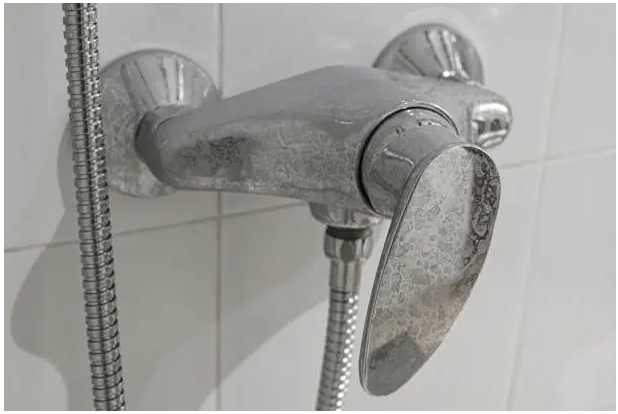
- White, chalky buildup around faucets, showerheads, and sinks.
- Soap that won’t lather well or leaves a filmy residue on your skin.
- Spots on dishes and glassware after washing.
- Stiff laundry that feels rough instead of soft.
- Mineral buildup inside kettles and coffee makers.
If you are unsure, you can buy inexpensive water hardness test strips online or at a hardware store. Your local water utility may also publish a water quality report if you’re on municipal water.
For soap makers: If you are unsure, distilled water is the safest bet for soap making because it eliminates the guesswork about mineral content!
Why Can’t I Use Hard Water to Make Soap?
When excess minerals like calcium and magnesium in hard water react with soap, they form that dreaded soap scum and can make it harder to get a rich, bubbly lather. Minerals like iron can also contribute to discoloration and rancidity over time. But good news! It’s not actually a safety issue, it can just be an annoying quality issue.
I personally am not in a “hard water” area so I use unfiltered sink water. But if you are in a hard water area, simply use filtered water or a jug of cheap distilled water from the grocery!
The Good News
If you DO end up using hard water, it is very rarely a safety issue in soap making. If you have a bar of soap that does not lather, it actually does not decrease its effectiveness of cleaning. If your soap is crumbly, it’s still soap. Even if it begins to go rancid quicker than you hoped, this is not idea but rarely, if ever, a safety issue! So there is no reason to be freaked out.
Find more science info at NC State’s Organic Chem Page for Soap Making
Happy soap making and remember, all glory to the One who created it all!