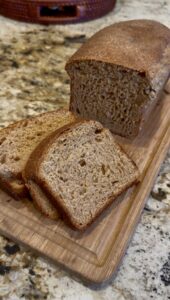
If you’re looking for the recipe for Tangzhong Bread, click here.
If you’ve ever struggled to get freshly milled bread to rise high and stay soft, you should know about tangzhong or yudane! When you read about these methods, they sound a little complicated, but the idea is actually incredibly simple:
You cook a small portion of your flour with water before adding it to your dough. That’s it!
So why does cooking flour make such a difference? It comes down to starch gelatinization. Let me explain.
First: The History
This is actually quite funny to me, because I love history. But this method of baking bread only originated a few decades ago in the 20th century. The method seems to have been invented in Japan where it is known as “yudane”, in the middle of the 20th century (where it was use to improve the texture of Hokkaido milk bread), but it was popularized in the 1990s by Chinese writer Yvonne Chen in her book The 65° Bread Doctor (65˚C = 149˚F, which is just above the temperature where starch and water form a gel). Which is why the Chinese name has stuck, even though it originated in Japan.
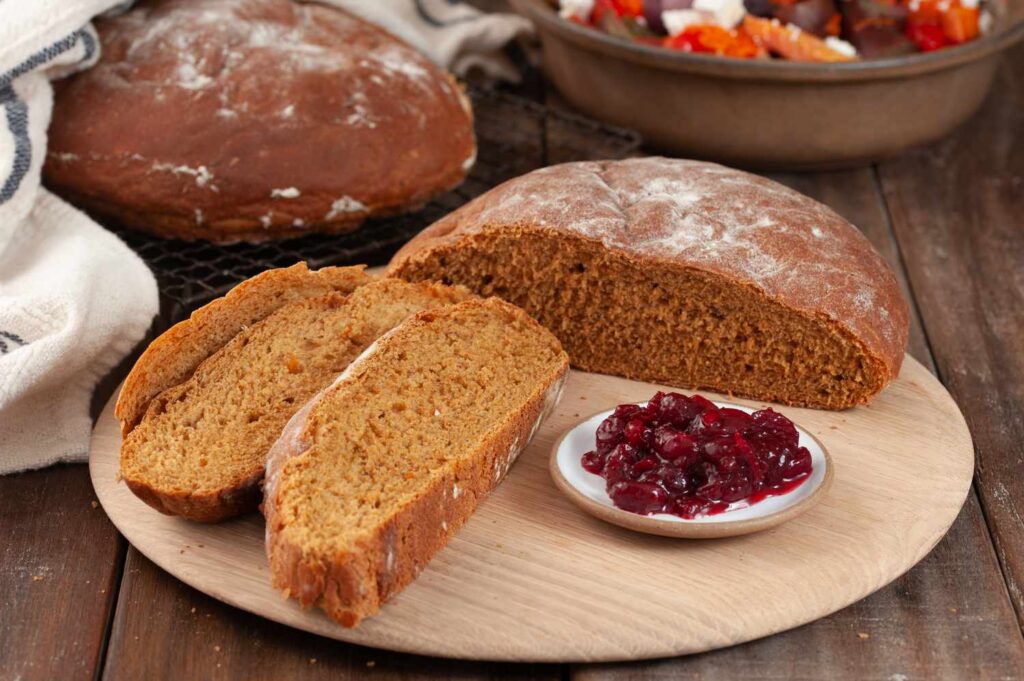
However, the practice of scalding flour in general HAS been used by various cultures for hundreds of years.. it’s just been done slightly differently. In Scandanavia, they use a scalding technique for rye flour since it has a weak gluten structure and high levels of alpha-amylase (enzymes that break down starches into sticky sugars). Pouring boiling water over a portion of the rye flour denatured these enzymes and gelatinized the starch, preventing the bread from collapsing into a gummy mess. (I believe this is where the Swedish limpa comes from).
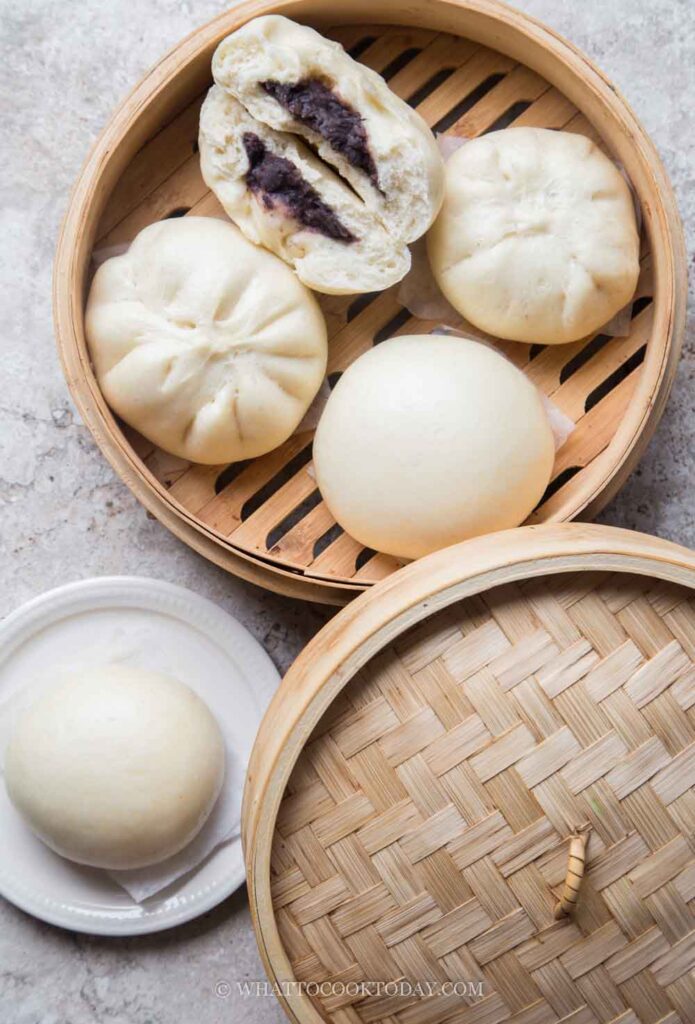
It’s also been used to make steam buns in Asian cultures for centuries or to create the soft, flexible wrappers for dumplings and the tender crumb of traditional steamed buns (baozi). Techniques like tangmin cooked hot water and flour to achieve the desired elasticity.
What Are Tangzhong and Yudane?
Tangzhong and yudane are two methods for pre-gelatinizing the starch in a portion of your flour.
The methods are slightly different:
- Yudane: boiling water is poured over flour and mixed together.
- Tangzhong: flour and water are mixed together and heated in a pan.
The terms are sometimes used interchangeably because both methods accomplish essentially the same thing: they heat flour and water together so that some of the starch gelatinizes before the dough is made.
This actually has a HUGE impact on your bread!
Let’s Talk About Starch
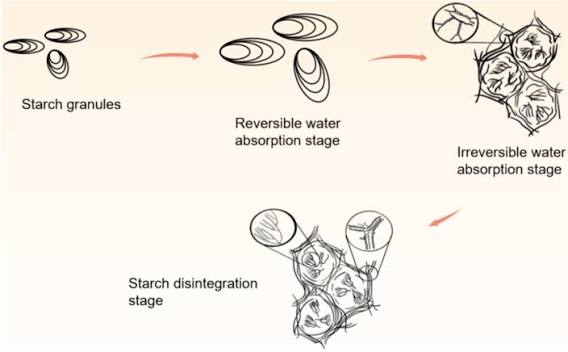
To understand why this works, we need to talk about what’s happening inside your flour. Flour contains tiny particles of starch. You can think of dry starch granules almost like tiny, hard beads. When they’re dry, they don’t hold nearly as much water as they can once they’re heated. But introduce heat + water, and BAM. The starch granules begin absorbing water. Like, a lot.
They swell. They soften. And eventually their original structure breaks down and the starch molecules disperse into the surrounding water. The mixture becomes thick, sticky, and gel-like. This process is called: Starch gelatinization.
It’s the same basic process that happens when you cook things like pasta or when the starch in your bread gelatinizes during baking. The clever part of tangzhong and yudane is that we don’t wait until the bread is baking to gelatinize this portion of the starch: we’re doing it beforehand!
So Why Would We Want to Cook the Flour First?
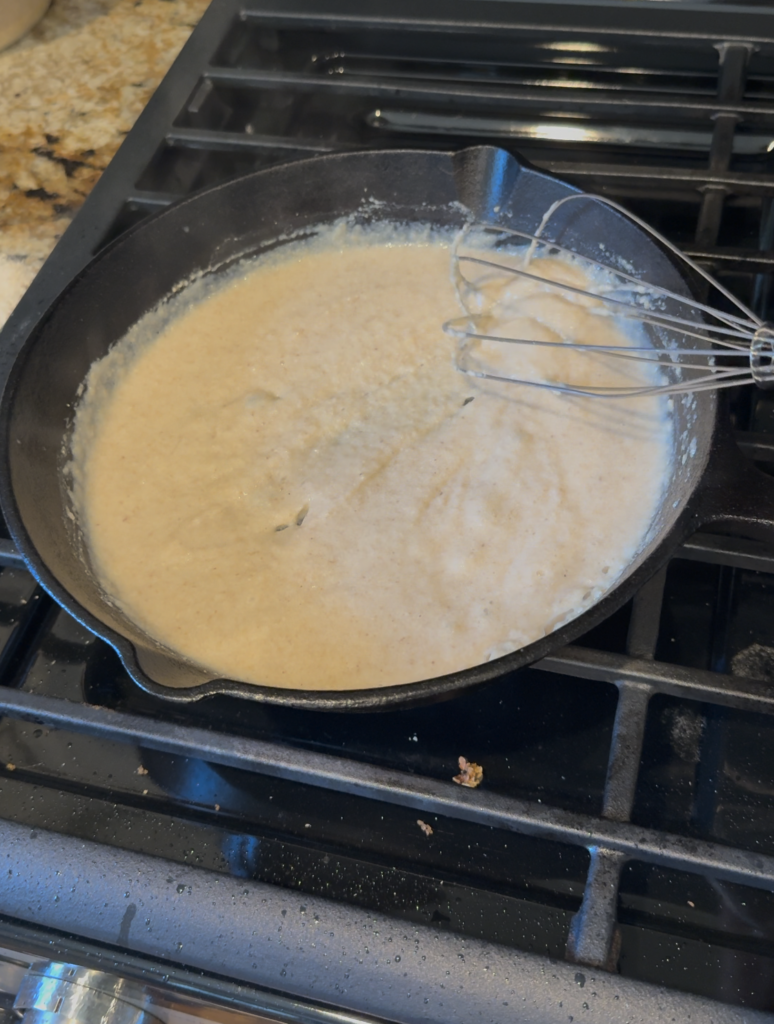
Because gelatinized starch can hold onto significantly more water than uncooked starch.
That means we can take a portion of our flour, cook it with water, and essentially give that starch a greater ability to retain water. Instead of all of that water behaving like free liquid in your dough, much of it becomes associated with the gelatinized starch. So you can have:
More water → but still a workable (not-super-sticky) dough.
That’s one of the major reasons tangzhong and yudane breads can be incredibly moist without feeling like you’re working with a soupy, impossible-to-handle dough. The pre-gelatinized starch is distributed throughout the dough and helps the finished bread retain that water. The result is a softer, moister crumb that stays fresh longer.
Why it’s Really Useful for Beginner Freshly Milled Bakers
If you’re new to bread baking, you might assume that adding more water to a dough should automatically make it softer. But unfortunately, it’s not quite that simple. More water can make bread softer… but it can also make the dough sticky, slack, and difficult to handle.
This is especially true when you’re working with whole grain or freshly milled flour, where bran and other components of the grain affect how the dough absorbs and distributes water. Tangzhong and yudane help you with this:
Instead of simply trying to knead a very wet dough into submission, you can change the way some of that water is held in the dough. That can give you a dough with a higher overall water content while still maintaining a consistency that is much easier to handle!
TL;DR – It’s going to give you a softer, more workable dough that will be LESS likely to be dense! (Because probably like you, I used to be a part of the dense-loaves-club, and I don’t really like it there 😂)
Also Great for Reducing Stale Bread
There’s another reason these breads have such a reputation for staying soft. It’s called starch retrogradation.
You may have noticed this every time you’ve left a loaf of bread sitting on the counter for a few days. Fresh bread is soft. Then, gradually, it becomes firmer. Eventually, it becomes stale. You might assume this is simply because the bread is drying out. But, actually, it’s Starch Retrogradation.
What Is Starch Retrogradation?
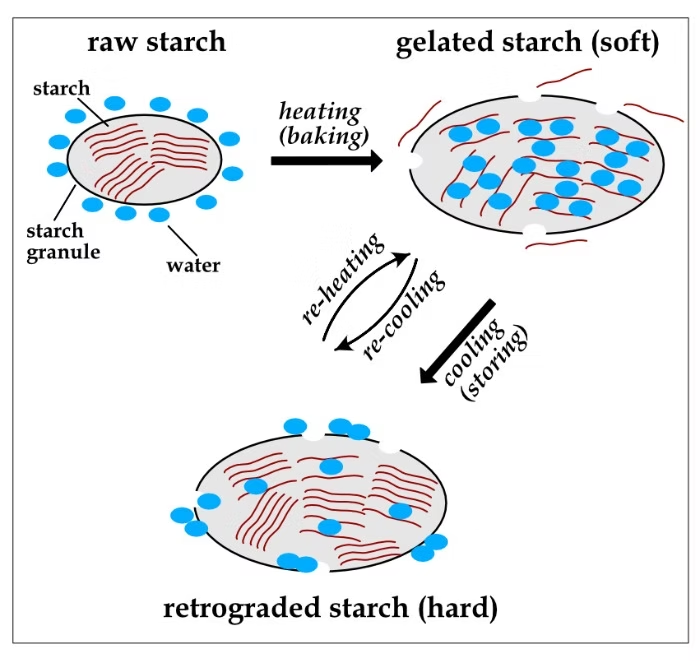
Like I said earlier: During baking, starch granules absorb water and gelatinize. Once the bread cools, the starch molecules that were disrupted during baking gradually begin to rearrange themselves into a more organized structure.
This process is called starch retrogradation.
As starch retrogradation happens, the crumb gradually changes from: soft → firmer → harder → stale. So bread staling isn’t simply a matter of water disappearing from the loaf. The structure of the starch itself is changing.
How Does Tangzhong/Yudane Affect Staling?
Because tangzhong and yudane change how much water is associated with the starch, they can help the bread retain moisture and remain soft for longer. Think about it, do your gummy bears go stale?
It doesn’t mean your bread will never go stale. But it changes the conditions of the bread so the crumb remains soft and moist for longer. All from simply cooking a little flour and water! I just think science is so cool.
Okay, How Much Flour Do You Need to Cook?
You don’t need to cook all of the flour in your recipe (please don’t do that, then the whole thing will be gelatinous instead of bread).
Tangzhong and yudane only use a portion of the total flour.
A rule-of-thumb is to use around 5–10% of your total flour weight.
And with that, the flour:water ratios vary between 1:1 to 1:4 | flour:water
For example:
If your recipe contains 500 grams of flour, 10% would be: 50 grams flour. If you used 50 grams of flour, you could use 50 grams of water. Or you could use 50 grams flour to 200 grams water.
This ratio varies based on personal preference, really. I prefer a 1:1 or 1:2 ratio. So, I would do 50 grams of water with between 50-100 grams or water.
You would use those 50 grams to make your tangzhong or yudane, while the remaining 450 grams would go into the dough normally. The important thing to remember is that the flour and water used in your tangzhong or yudane are still part of your total flour and total liquid. You’re not adding an entirely separate ingredient. You’re just changing the order all of it is going into the recipe.

You Can Use This Technique for Any Bread Recipe
The basic idea is:
Take a portion of the flour + a portion of the liquid → gelatinize the starch → incorporate it back into the recipe.
This can be particularly useful in recipes where you want:
- a softer texture
- a more moist crumb
- better water retention
- bread that stays soft longer
- a higher-hydration dough that is still manageable
You can experiment with the technique in different enriched breads, rolls, buns, sandwich breads, and other yeast-leavened recipes. The exact ratio will depend on the recipe and your preference, but the underlying science stays the same.
So Which One Should You Use?
The good news is that you don’t have to obsess over whether tangzhong or yudane is “better.” Both are accomplishing the same fundamental thing: pre-gelatinizing starch. Regardless of which one you choose, the finished breads are extremely similar. So choose whichever method fits your baking style.
Choose yudane if:
You like simple, traditional methods and don’t mind pouring boiling water over your flour.
Choose tangzhong if:
You prefer cooking the flour and water together and being able to watch the mixture thicken.
Either way, you’re using the same basic bit of food science.
Takeaway
Tangzhong and yudane are basically magic. When flour is heated with water, its starch gelatinizes. The starch absorbs water, swells, and forms a gel-like structure. By doing this to a portion of your flour before making your bread, you give that starch a greater ability to hold onto water. That means you can create bread that is: moist + soft + tender + easier to handle + longer-lasting
Happy baking! And remember, all glory to the One who created it all 🙂