10 Best Crops to Grow If You Actually Want to Feed Your Family and WHY
If you think about your garden in terms of productivity and grocery budgeting, then here are the most practical foods to grow!
Instead of focusing on variety or novelty, you start asking better questions:
- Which crops produce the most food per square foot?
- Which ones are calorie-dense enough to sustain a family?
- Which ones store well for months?
When you look at it like this, there are a few plants that specifically stand out in the research and in real-world homesteads.
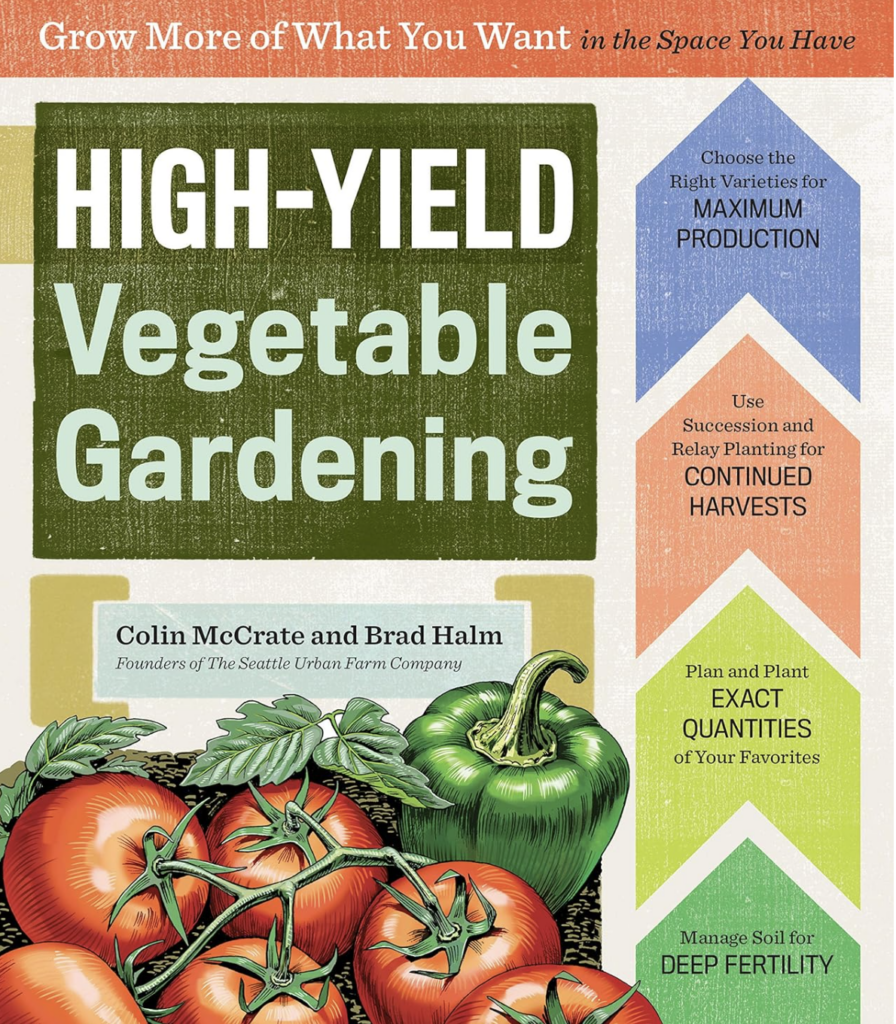
I read this book called High-Yield Vegetable Gardening: Grow More of What You Want in the Space You Have and it was so helpful in prioritizing what I am growing! Now, I definitely like to grow something fancy and unnecessary every once in a while. But for the most part, I want things to decrease my grocery budget.
1. White Potatoes (High in Good Calories)
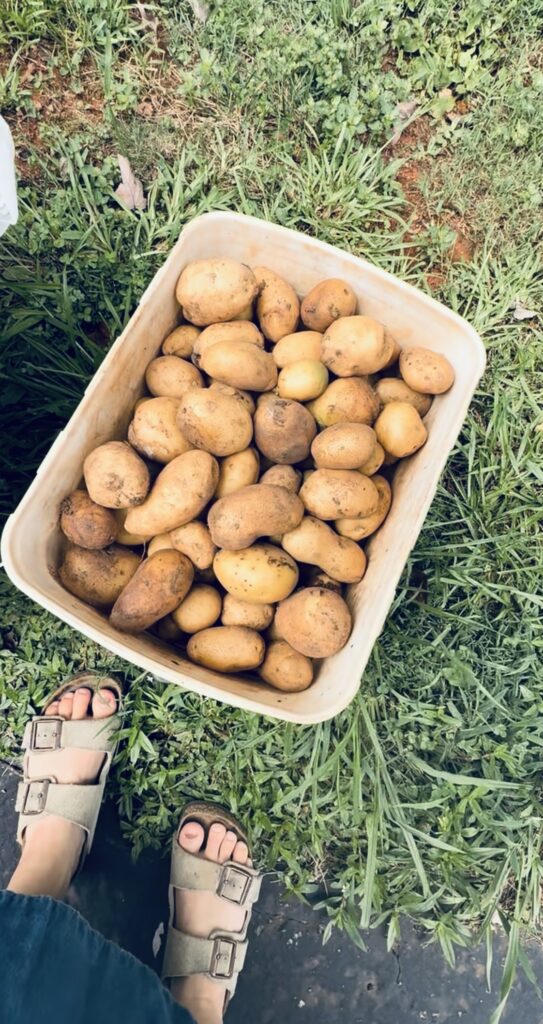
If you only had space for one staple crop, potatoes would be hard to beat.
- Up to 30,000+ pounds per acre in good conditions
- That’s about 50 lbs per 100 sqft or 0.6 pounds per 1 sqft
- A single pound of potatoes provides about 350 calories, making them one of the most calorie-dense vegetables
- Store for 2 to 6 months months without processing
- Just plant regular potatoes that have sprouted in your pantry, no need to buy the fancy seed potatoes
Potatoes have historically fed entire populations because they combine high yield + high nutrition + storability. In a backyard garden, even a small patch can produce a ton of food!
2. Sweet Potatoes (High Yield + Even More Nutrition)
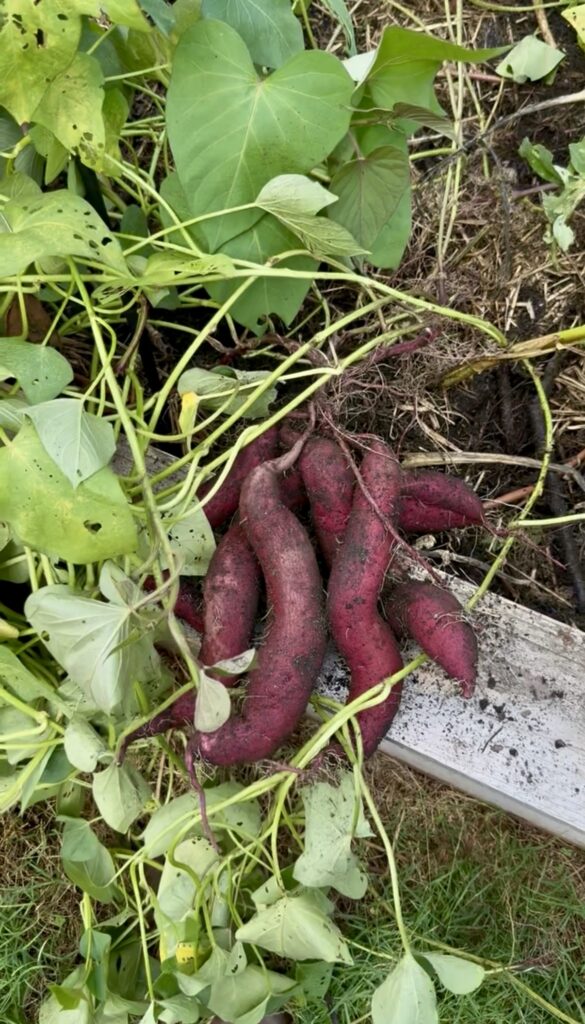
Sweet potatoes are just as impressive, and are additionally more nutrient dense.
- 15,000-30,000 lbs per acre possible
- Rich in vitamin A and carbohydrates
- Each pound provides about 380 to 400 calories, slightly higher than white potatoes
- The vines produce edible greens, increasing total food output per plant
- Drought-tolerant and resilient
- Just grow slips from regular sweet potatoes from the store, no need to buy expensive slips
They’re at the tippy top of my list because of how easy they are to grow and they produce both tubers and edible leaves.
3. Dry Beans (Protein + Storage Power)
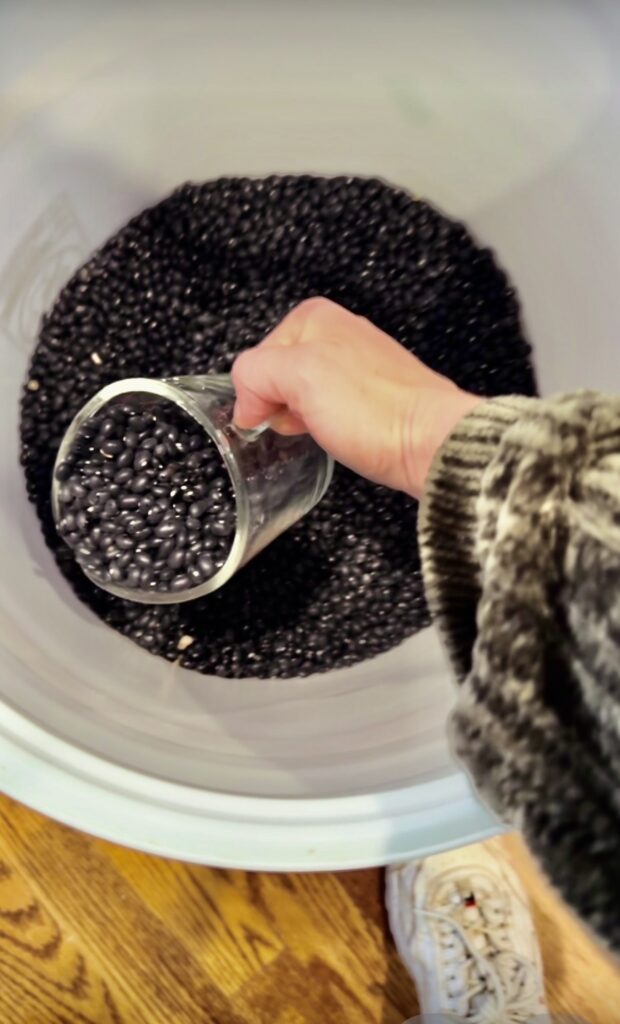
Beans are one of the most practical survival crops you can grow.
- Dry beans contain about 20 to 25 percent protein by weight
- Yields can reach 1,000 to 2,000 pounds per acre, but because they are dried, the food is concentrated and long-lasting
- Pole beans can produce 2 to 3 times more per square foot than bush beans by using vertical space
- Properly dried beans can store for many years
They also improve your soil by fixing nitrogen, which helps your whole garden.
4. Winter Squash (Massive Harvests from One Plant)
I’m talking about butternut, acorn, pumpkins… not *so much* summer squash.
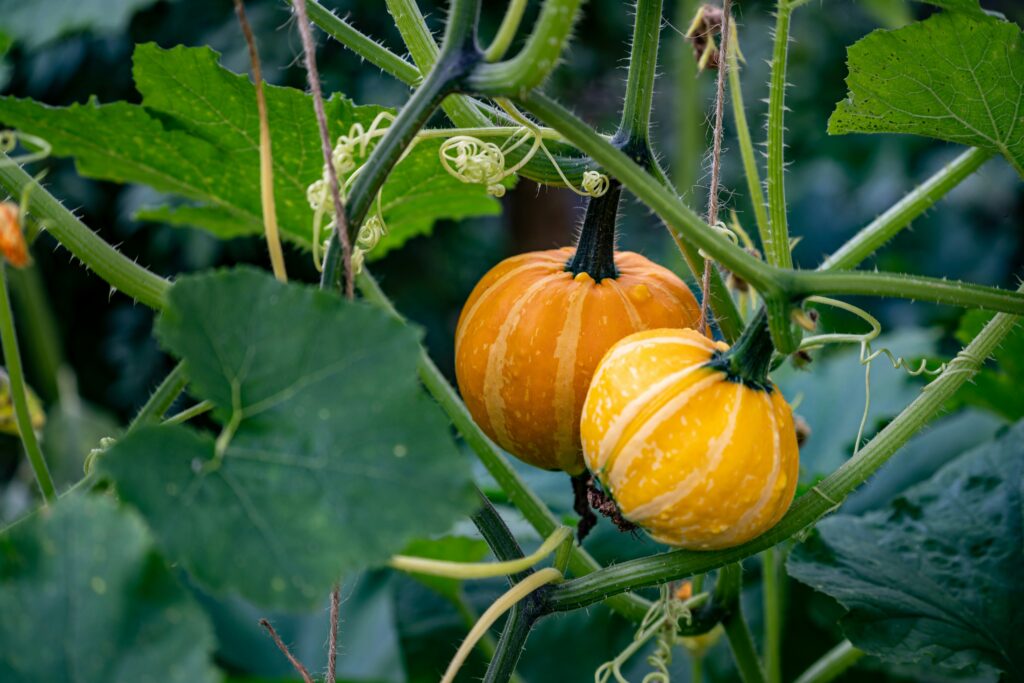
- Known for “excess harvest” from just a few plants
- A single plant can produce 10 to 30 pounds of squash, depending on the variety
- Squash contains about 45 calories per pound, but the total yield per plant is high
- Long storage life (2-6 months without refrigeration)
- High in calories compared to most vegetables
- Large leaves shade the soil, reducing water loss and weed pressure which benefits all your crops
A few squash plants can provide a steady food source throughout the whole winter.
5. Corn (Versatile, If You Have the Space)
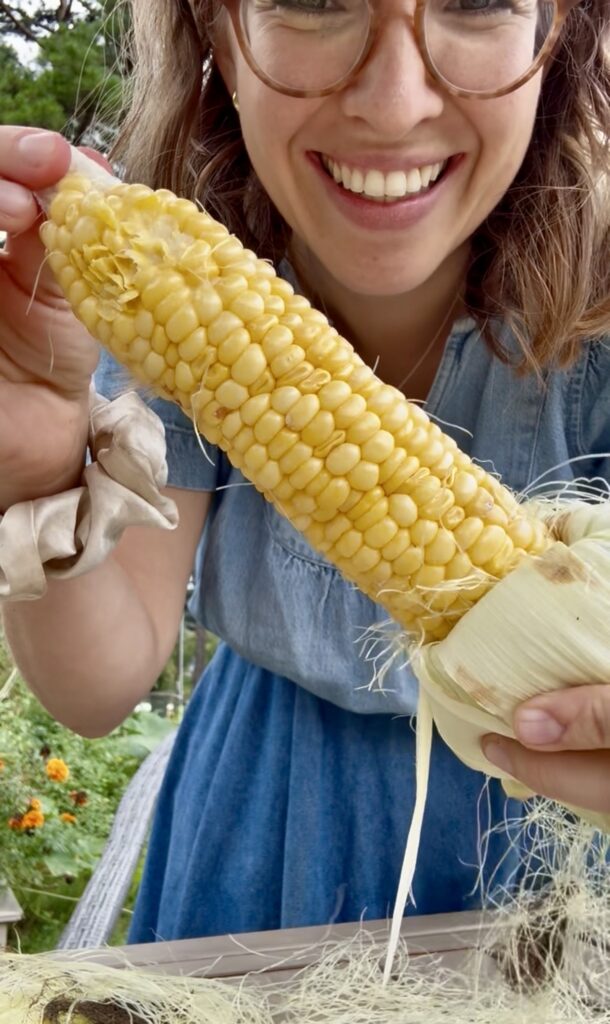
Corn isn’t always the most space-efficient, but it’s one of the most calorie-dense crops you can grow.
- Field corn yields average around 150 bushels per acre, which is roughly 8,000 to 9,000 pounds of grain
- One pound of dried corn provides about 1,500 calories
- Can be dried and stored long-term as whole kernels or ground into meal
- Works well in traditional intercropping systems like corn, beans, and squash
If you’re serious about food security, corn is worth considering.
6. Zucchini & Summer Squash (Also Ridiculous Production)
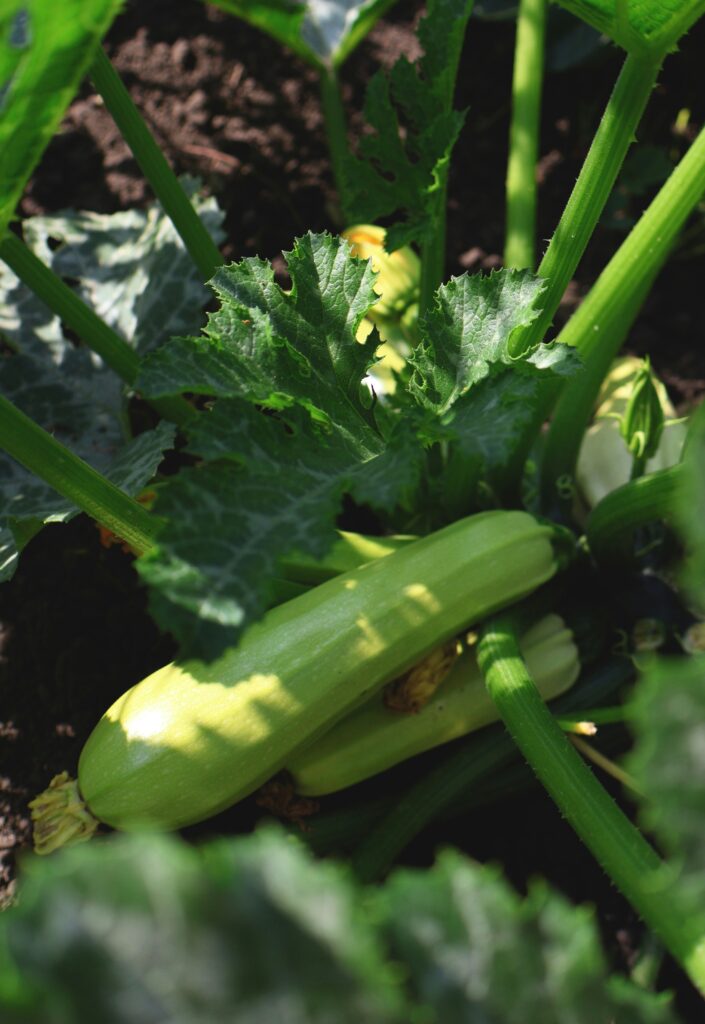
Zucchini is famous for a reason.
- A single plant commonly produces 6 to 10 pounds or more over a season
- Fruits grow rapidly and can be harvested continuously every few days
- Early harvest encourages more production, increasing total yield
- Short maturity time, often 45 to 55 days, allows for flexible planting schedules
We call zucchini a “food factory” because of how much it produces! Once you get to the point in summer where Zuchhini is coming out of your ears and your neighbors won’t even accept any as gifts because they’re everywhere – you’ll know what I mean 😂.
7. Tomatoes (Heavy Producers Over Time)
Tomatoes don’t necessarily win on calories, but they win on total yield and versatility. They’re useful for making so many of your pantry/fridge staples.
- Indeterminate varieties can produce 10 to 20 pounds per plant under good conditions
- One square foot of trellised tomatoes can yield significantly more than unsupported plants
- High in vitamin C and lycopene, which other plants on this list are lacking, so tomatoes have unique nutritional value
- Can be preserved by canning, drying, or freezing
For a family kitchen, they’re essential! Sauces for spaghetti, pizza, soup, ketchup, etc.
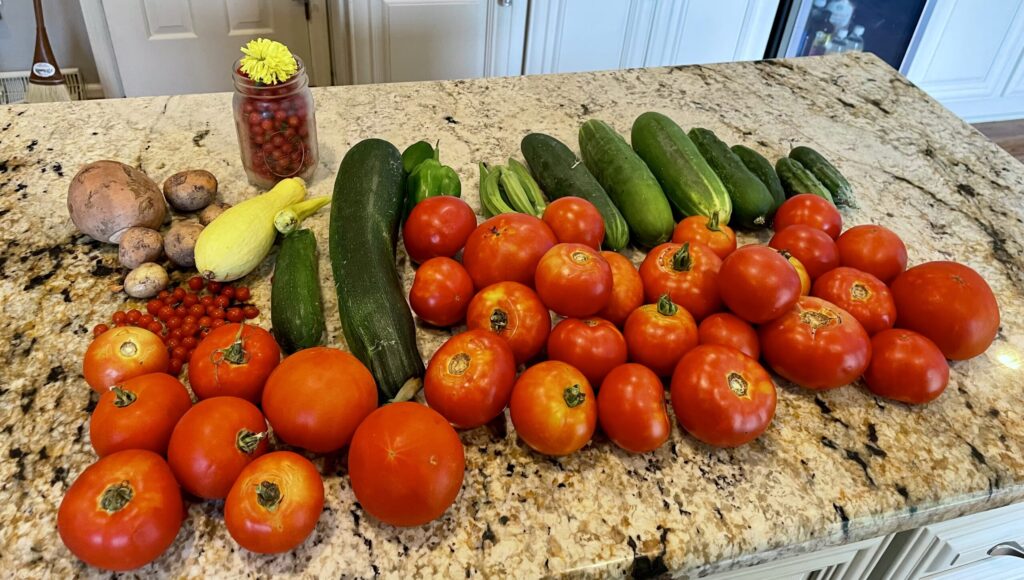
8. Cucumbers (High Output in Small Space)
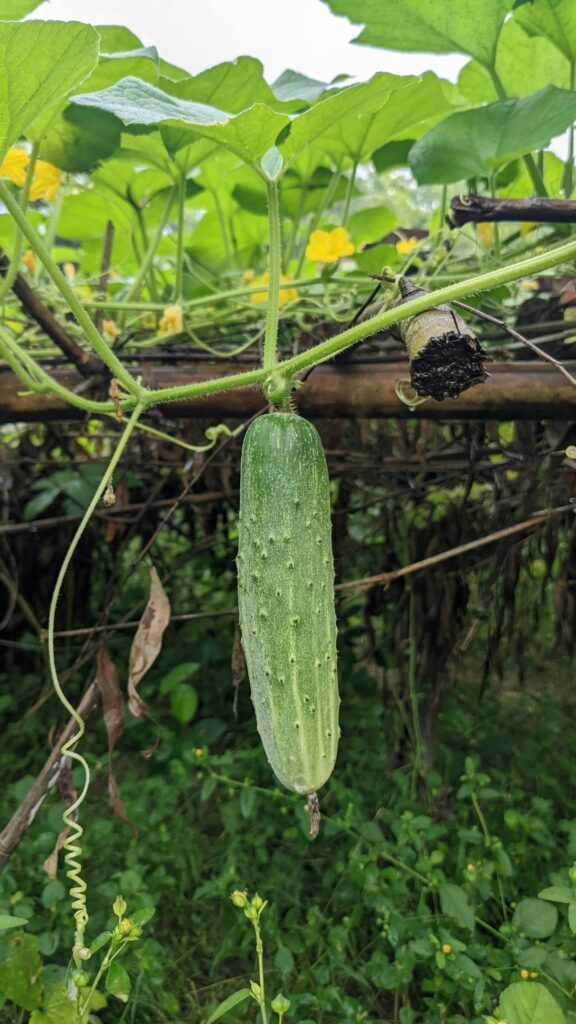
Cucumbers are incredibly efficient, especially when grown vertically.
- A single plant can produce 10 to 20 pounds of cucumbers
- Trellising can increase yield per square foot by improving light exposure and airflow
- Fast growth, often producing within 50 to 70 days
- Easily preserved through fermentation or pickling
Perfect for smaller gardens trying to stretch production. (Growing vertically is one of the key strategies in High-Yield Vegetable Gardening, and cucumbers are a strong example of that principle).
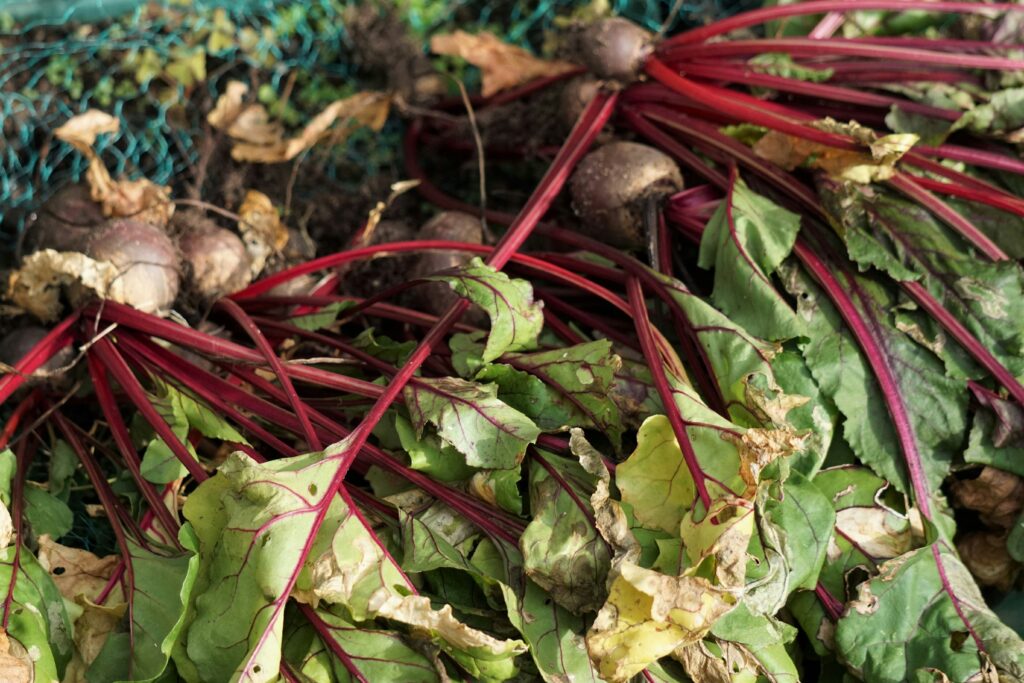
9. Beets (Two Crops in One)
Beets are underrated when it comes to feeding a family! My husband personally dislikes beets, and I’m still searching for ways to sneak them into dinner. However, myself and my children enjoy them so I will keep them growing!
- Roots typically yield 0.5 to 1 pound per square foot
- Beet greens are edible and can be harvested before roots mature
- Roots contain about 40 to 45 calories per pound
- Mature quickly, often in 50 to 60 days, allowing for succession planting
You’re essentially harvesting twice from the same plant! Additionally, you can use beet juice to dye fabric if you’re into that kinda thing.
10. Leafy Greens (Fast, Continuous Harvests)
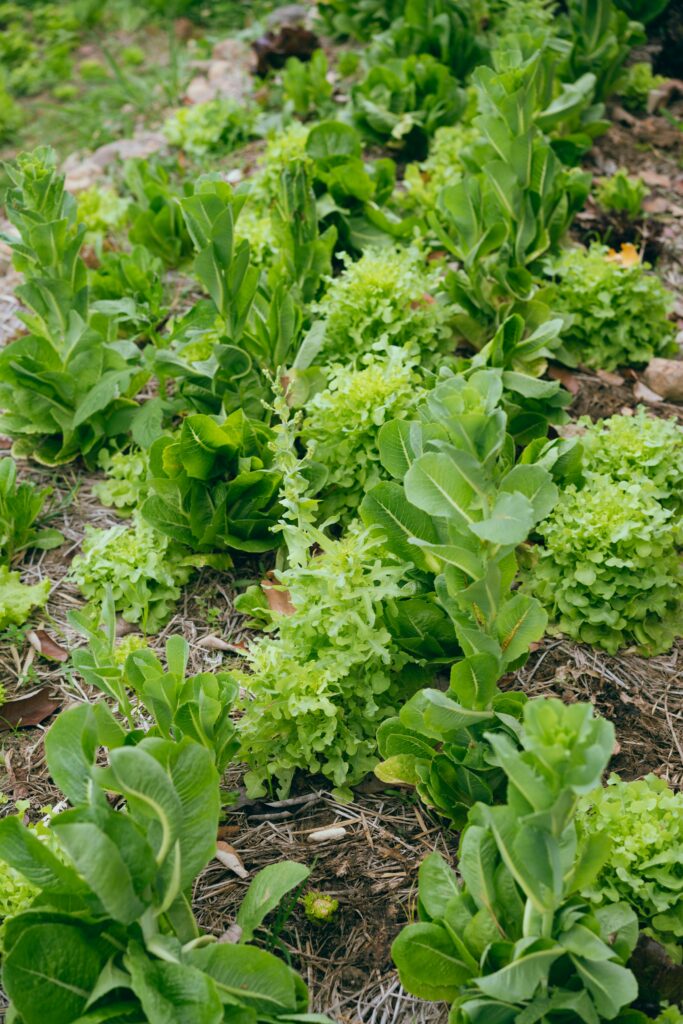
Leafy greens won’t fill you up, but they will keep your family nourished and they are just so refreshing to eat!
- They grow QUICKLY, can be harvested in as little as 25 to 40 days
- Many varieties allow for cut-and-come-again harvesting, producing multiple harvests per planting
- High yield per square foot due to dense planting
- Rich in vitamins A, C, and K
While they are not very calorie dense, they are a lovely addition to meals, are very easy to grow, and fill the gaps between other crops! If you plant lettuce around all of the other plants on this list, then there will be no room for weeds to grow.
11. Luffa (Practical, high-yield household crop)
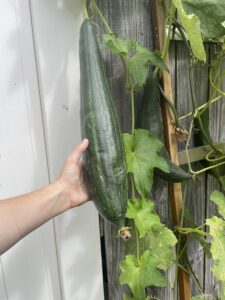
Luffa is not your typical “staple” food, and it wasn’t listed in this book, but I had to add it onto this list because of my own experience with it! We ate young tender luffas like zuchinni when we lived in Japan. But you can also leave the luffa on the vine to grow fibrous and dry to make your own sponges!
- A single plant can produce 10 to 20 mature luffa gourds under good growing conditions
- Each gourd becomes a fully usable sponge after drying and processing
- Immature fruits are edible and can be harvested earlier as a vegetable, similar to zucchini
- Typically 120 to 200 frost-free days to fully mature into sponges; harvest after 60 days for eating.
- Vertical growing is essential, which allows large production from a relatively small footprint
- Mature sponges are fully biodegradable, replacing synthetic kitchen and bath products
- Once dried, luffas store for years without spoilage, making them a long-term household resource
From a high-yield gardening perspective, luffa fits into the idea of maximizing what your garden provides. Instead of producing calories, it produces a reusable good that reduces what you need to buy. So, for a family trying to live more sustainably, a few plants can supply an entire year’s worth of natural sponges! You can find my post on how to grow your own luffas here.

A Simple “Feed Your Family” Garden Strategy
Ultimately, you don’t feed a family on lettuce and herbs. You feed a family on: Calories, protein, and storage crops (things that store for months).
That’s why historically, cultures relied on combinations like:
- Potatoes + dairy
- Corn + beans + squash
- Rice + legumes
So if you want a practical starting point, aim for:
• 30-40% potatoes & sweet potatoes
• 20% beans
• 20% squash + corn
• 20% everything else (tomatoes, cucumbers, greens)
This balance gives you:
- Calories
- Nutrients
- Preservation options
- Variety your family will actually eat
Hope this was helpful, happy growing!
❤️ Rachel
Frequently Asked Questions
- What crops produce the most food per plant?
- What should I grow to feed a family of 4?
- What are the best survival crops to grow?
- How much garden space do you need to feed a family?