How to Grow Your Own Luffas for Eating and Washing
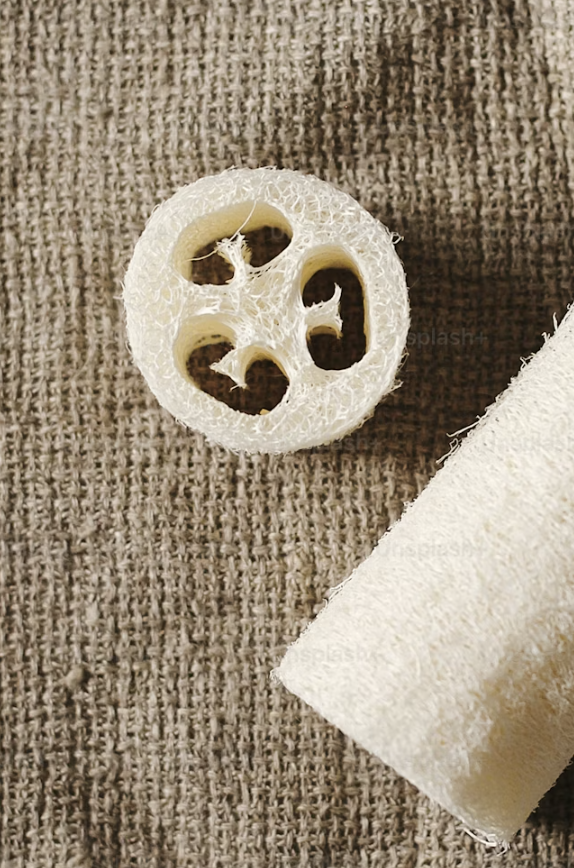
Luffa is not your typical “staple” food… but it has become a non-negotiable plant to grow in our garden every year!
We ate young tender luffas like zuchinni when we lived in Japan. But you can also leave the luffa on the vine to grow fibrous and dry to make your own sponges!
- A single plant can produce 10 to 20 mature luffa gourds under good growing conditions
- Each gourd becomes a fully usable sponge after drying and processing
- Immature fruits are edible and can be harvested earlier as a vegetable, similar to zucchini
- Typically 120 to 200 frost-free days to fully mature into sponges; harvest after 60 days for eating.
- Vertical growing is essential, which allows large production from a relatively small footprint
- Mature sponges are fully biodegradable, replacing synthetic kitchen and bath products
- Once dried, luffas store for years without spoilage, making them a long-term household resource
From a high-yield gardening perspective, luffa fits into the idea of maximizing what your garden provides. Instead of producing calories, it produces a reusable good that reduces what you need to buy. So, for a family trying to live more sustainably, a few plants can supply an entire year’s worth of natural sponges!
How to Grow Your Own Luffas
Luffa comes from a vining plant in the cucumber family, most commonly Luffa aegyptiaca. When harvested young, it’s edible like squash. When left to fully mature and dry, the interior fibers form the sponge.
Climate and timing
Luffa needs a long, warm growing season.
- Ideal growing time: 150-200 frost-free days
- Soil temperature for germination: at least 70°F (21°C)
- Planting:
- Start seeds indoors 3-4 weeks before last frost
- Transplant outdoors after soil has warmed and nights stay above 55°F
If planted too late, you might risk the gourds not having time to mature into sponges.
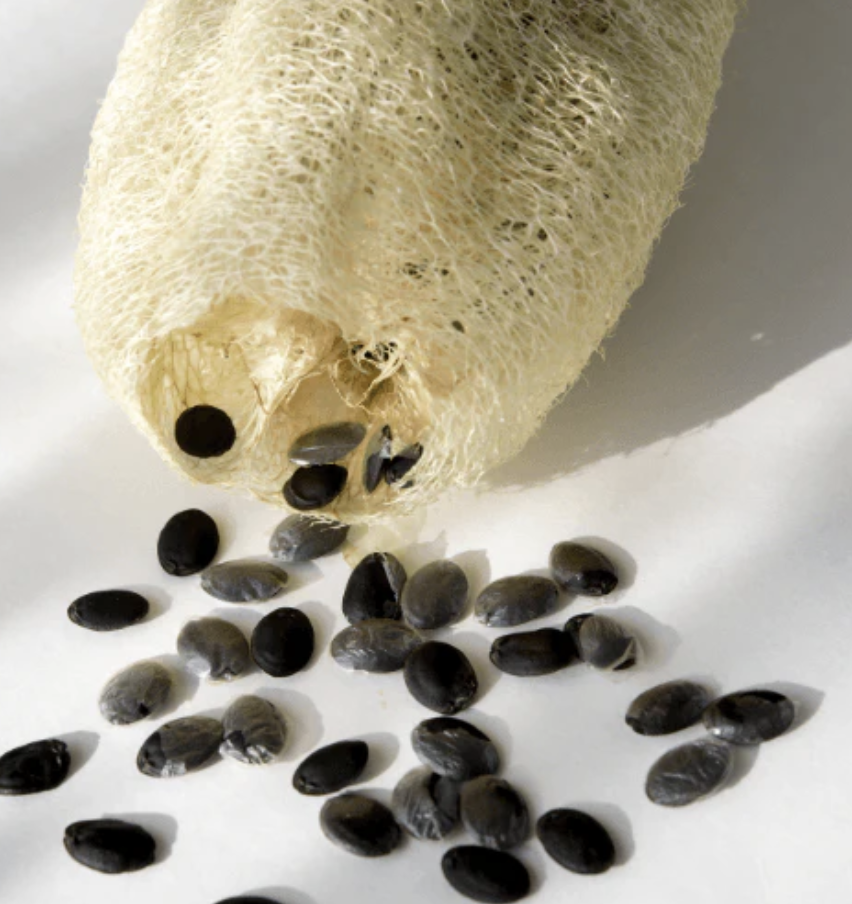
Starting seeds
Luffa seeds have a hard outer coating, so germination can be slow. So don’t lose heart if they’re not sprouting!
- Optional but helpful: Soak seeds in warm water for 24 hours
- Plant seeds ½-1 inch deep in seed-starting mix
- Keep soil consistently moist (not soggy)
- Provide warmth (70-85°F is ideal)… but they can tolerate cooler or hotter for short periods!
Germination typically takes 7-14 days, sometimes longer.
Transplanting and spacing
Once seedlings have a few true leaves:
- Space plants 3-5 feet apart
- Choose a location with:
- Full sun (6-8+ hours daily)
- Well-draining soil
- Add compost before planting for better growth
Luffa vines get large, so don’t crowd them. (You know how gardeners are haha!)
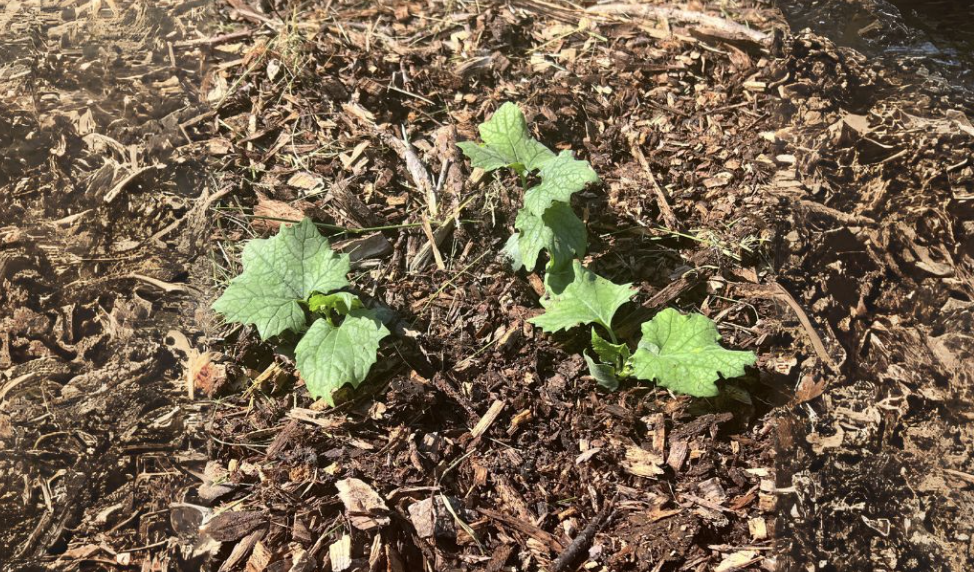
Trellising (important)
Luffa performs best when grown vertically. You will get the most bang for your buck with each plant if trellised.
- Use a strong trellis, fence, or arch
- Vines can reach 15-30 feet long
- Hanging fruit grows straighter and cleaner
Without support, gourds may rot or become misshapen on the ground.
Water and feeding
- Water deeply 1-2 times per week, depending on rainfall
- Keep soil evenly moist, especially during flowering and fruiting
- Avoid overhead watering late in the day (reduces disease risk and burning the leaves)
Fertilizing:
- At planting: mix in compost
- Mid-season: apply a compost tea if growth slows (or fertilizer if that’s your preference but I use a simple compost tea made from weeds from my yard)
If you have a LOT of leaves and not very many gourds, your soil could have too much nitrogen.
If you have a LOT of leaves and not very many gourds, your soil could have too much nitrogen.
Pollination
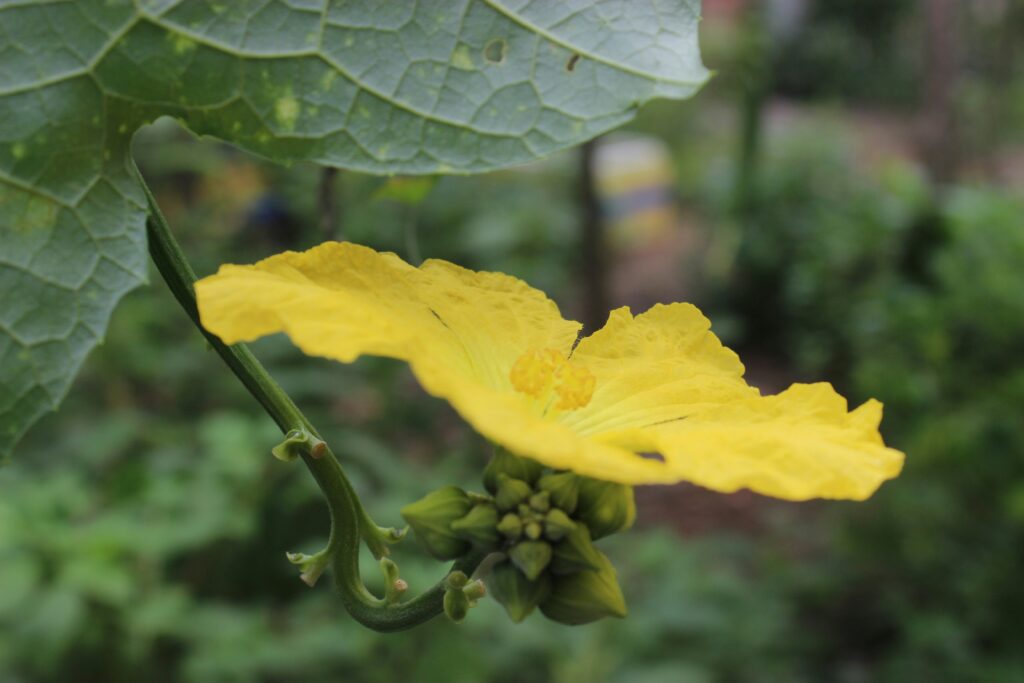
Luffa produces separate male and female flowers.
- Bees usually handle pollination… also ants pollinate as well!
- If fruit isn’t forming, you can hand-pollinate:
- Transfer pollen from a male flower to a female flower (which has a tiny fruit behind it)
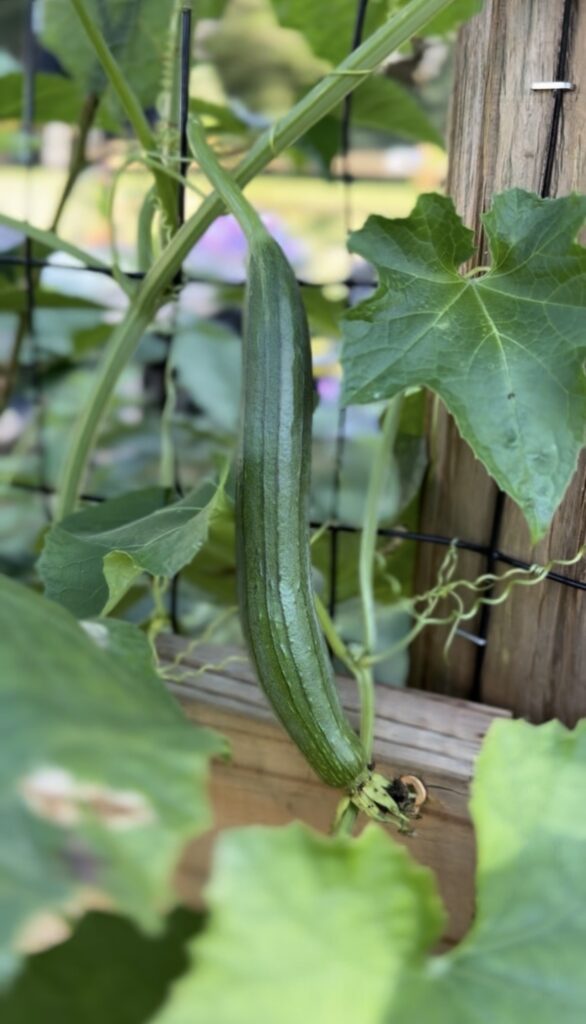
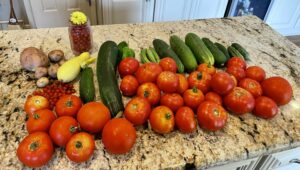
Small, tender luffa good for eating
Growing period
After pollination:
- Fruits develop through summer
- For sponges, you must let them fully mature on the vine
- 10+ inches
- Fibrous inside
- Bitter or spongy in texture
- Typically 120-200 days after planting
- Or about 6-8+ weeks after the fruit first forms
- For eating as a tender veggie (like zuchinni), harvest younger
- 4-8 inches long
- Typically ready 45-70 days after planting
- More specifically: about 7-14 days after the flower is pollinated
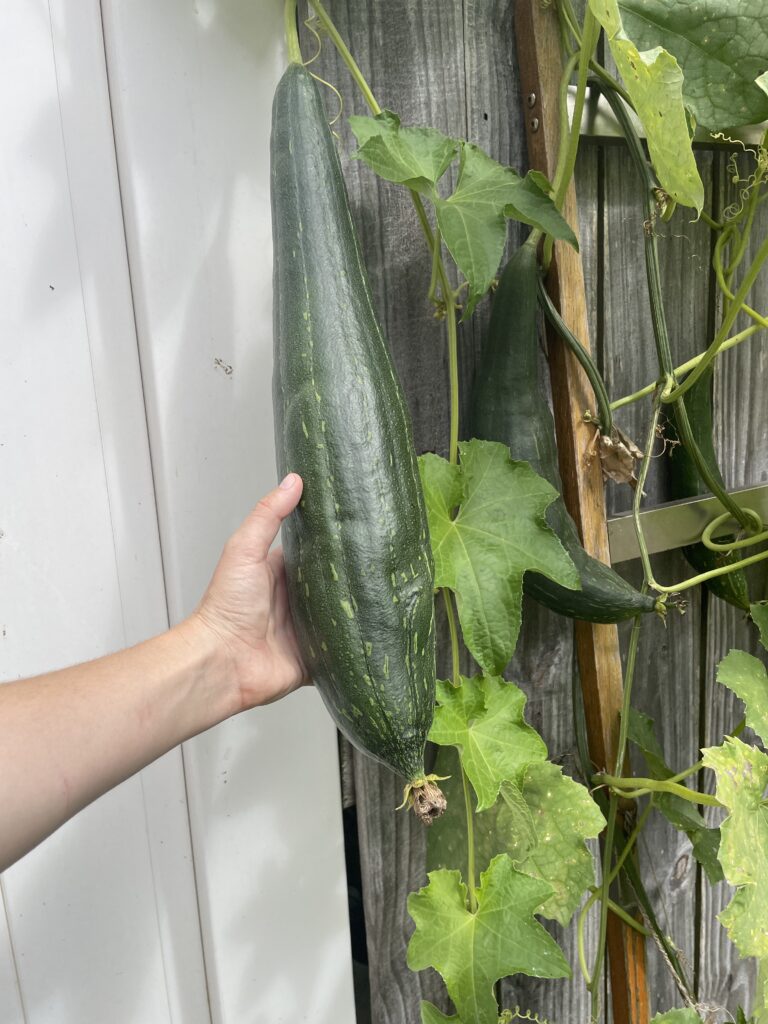
Harvesting for sponges
Wait until the gourds are:
- Dry, lightweight, and brown/yellow
- Skin may feel brittle or start peeling
- You may hear seeds rattling inside
If frost threatens before full drying:
- Harvest anyway and finish drying indoors
Processing the luffa
- Peel off the outer skin
- Shake out seeds (save for next year)
- I bought luffa seeds ONCE years ago and have simply saved the seeds from a few plants each year since.
- Rinse the sponge thoroughly
- Optional: soak in diluted bleach water or vinegar to lighten color and lessen mold potential
- Dry completely in a well-ventilated area
Common problems
- Not enough time to mature
→ Start earlier next season - Lots of vines, no fruit
→ Too much nitrogen or poor pollination - Small or deformed gourds
→ Inconsistent watering or lack of trellis - Rotting fruit
→ Sitting on soil; use vertical support
Yield expectations
Each plant can produce 6-20+ luffas, depending on conditions and season length. That is a HUGE yeild per plant!
General timeline comparison
- Eating stage: ~50-60 days
- Sponge stage: ~150+ days
(So you’re looking at about 3 extra months on the vine after the edible stage).
Seed saving
Luffa seeds are easy to save:
- Let gourds fully mature and dry
- Collect black seeds from inside
- Store in a cool, dry place
Seeds remain viable for several years.
I hope this inspired you to grow your own! Happy gardening,