If you bake bread with freshly milled flour, you’ve probably noticed it behaves a little differently than store-bought flour. It absorbs more water, develops gluten more slowly.. but before any dough is ready to be left to proof, we ask ourselves one question:
“Is this dough kneaded enough yet?”
That’s where the windowpane test comes in.
It’s a simple, reliable way to check gluten development (also known as the STRETCHINESS of the dough). Once you know what to look for, it completely changes the consistency of your loaves. Let’s walk through what it is, why it matters (especially for whole grain dough), and how to do it.
What Is the Windowpane Test?
The windowpane test is a hands-on method bakers use to see if gluten has developed enough in bread dough. Proper gluten development allows dough to stretch and, thus, trap gas during fermentation, resulting in:
- Better rise
- Improved structure
- Softer crumb
- Less dense loaves
When gluten is sufficiently developed, you can stretch a small piece of dough thin enough that light passes through it – like a windowpane – without tearing. This indicates the gluten network is elastic and strong.
So, essentially windowpane test is justtesting the stretch of the dough.
But here’s the kicker, THIS IS NOT A PERFECT TEST EITHER! Bread can be finicky. Especially freshly milled bread, it is alive.
So before explaining how to test for the Windowpane, I want you to remember that it will likely NOT be perfect every time
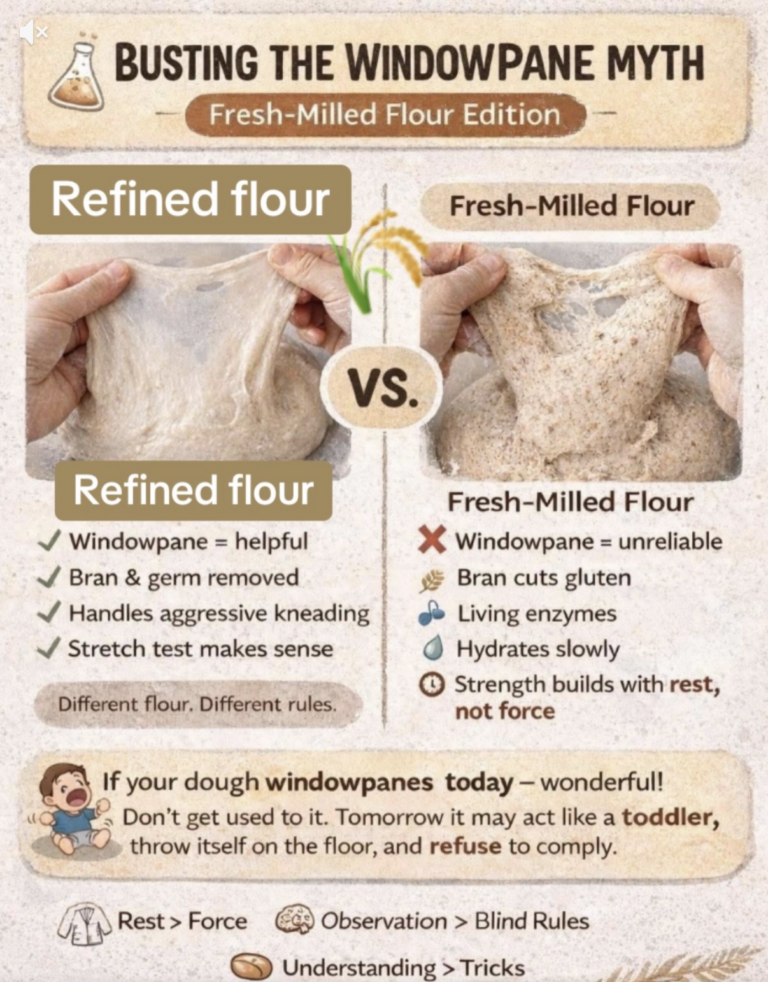
Why It Matters Even More with Freshly Milled Flour
Freshly milled flour contains:
- The bran
- The germ
- The endosperm
Unlike sifted white flour, the bran particles can interrupt gluten formation by physically cutting through gluten strands. This means:
- Dough often needs more hydration
- Rest periods (autolyse) help significantly (to soften the bran)
- Kneading may take longer
- Development can feel harder to judge
Because of this, the windowpane test becomes especially helpful when working with whole grain dough. It gives you an objective checkpoint rather than guessing based on kneading time.
When to Perform the Test
You can check your dough:
- After kneading
- During stretch-and-fold sessions
- Before bulk fermentation
If your dough resists stretching, give it a 5-10 minute rest and test again before continuing to knead. Freshly milled dough often benefits from patience.
Step-by-Step: How to Do the Windowpane Test
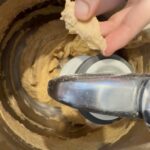
1. Take a Small Piece
Pinch off a dough piece about the size of a golf ball.
You don’t need much — just enough to stretch comfortably.
2. Gently Flatten
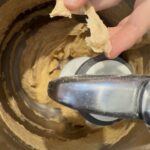
Lightly press it into a disk using your fingers.
Avoid tearing or aggressive pulling at this stage.
3. Stretch Slowly
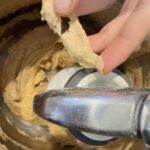
Using both hands, gently stretch the dough outward:
- Rotate as you go
- Let gravity help
- Move slowly
Think coaxing, not pulling.
4. Look for Light Passing Through
Hold the stretched dough up to a light source or window.
You’re looking for:
-Thin translucent membrane
-Light shining through
-Minimal tearing
This is a successful windowpane.
What If It Tears?
Don’t worry — this is common, especially with fresh flour.
Here’s how to interpret results:
-Tears Immediately
- Gluten underdeveloped
- Continue kneading or folding
- Or allow more rest time
-Stretches Slightly Then Rips
- Partial development
- Very normal for whole wheat
- One or two more folds/rest cycles may help
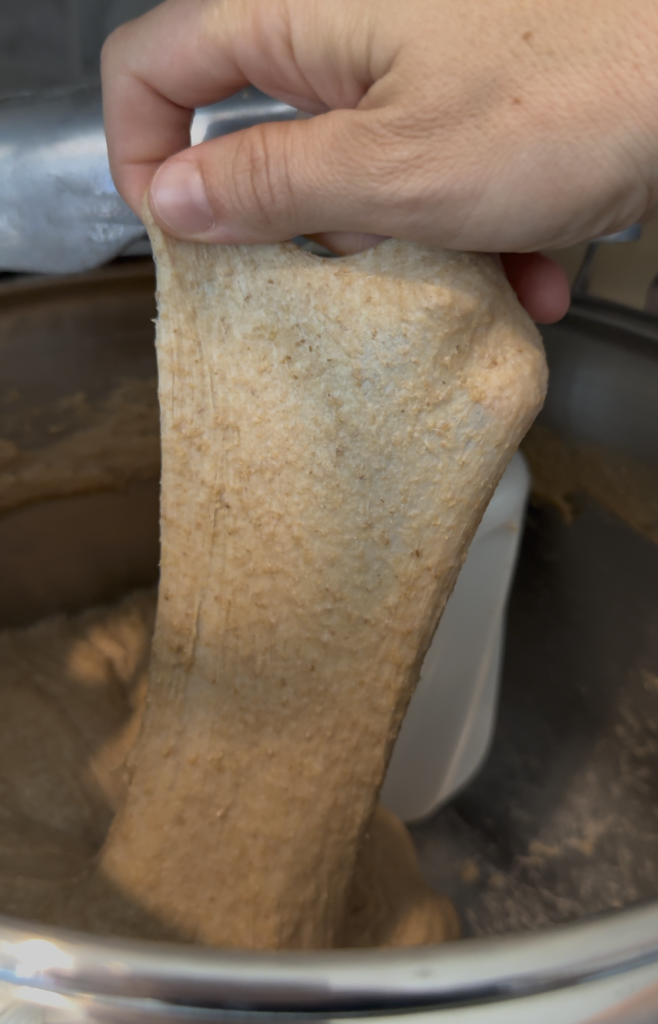
-Thin Stretch with Minor Imperfections
- Often ideal for freshly milled dough
- Whole grain rarely forms a perfect windowpane
- If it stretches thin before tearing, you’re likely ready
Tips for Better Windowpane Results
Hydrate Well
Fresh flour absorbs more water than aged flour. Slightly wetter dough develops gluten more easily.
Use an Autolyse
Mix flour and water and rest 15-30 minutes before kneading.
This:
- Softens bran
- Improves elasticity
- Reduces kneading time
Be Patient
Gluten development isn’t JUST mechanical – it’s biochemical. Time often works better than force.
You can also try Stretch & Folds
Instead of heavy kneading:
- Perform folds every 20-30 minutes
- Let dough rest between
- Even if it’s not sourdough!
This is gentle and effective for whole grain structure.
A Final Encouragement
The windowpane test is a tool, not a rulebook. If I’ve learned anything, Freshly Milled Flour is just as much of an art as it is a science. I’ve learned to observe dough as a living material rather than forcing it into commercial baking standards. Sometimes loaves won’t pass a textbook-perfect windowpane, yet bake beautifully with:
- Excellent rise
- Tender crumb
- Rich flavor
Happy Baking! And remember, all glory to the One who created it all 🙂
❤️ Rachel
Products from my kitchen (click on image for link)