
Click Here for a little Free Downloadable PDF Guide 🙂
Nausea can strike for dozens of reasons. Sometimes it’s from a stomach virus (like norovirus that we were recently struck with). Sometimes it’s motion sickness. Sometimes pregnancy. Sometimes it’s stress. Sometimes digestion is just moving too slowly. And sometimes it’s reflux or irritation. The body can arrive at that same unsettled feeling through very different pathways.
When we understand this, herbal choices start to make more sense. Often, these remedies don’t completely rid you of the sensation of nausea (although sometimes they do!), but even if relief isn’t complete, some alleviation of the terrible sensation is still much appreciated! These are all ingredients you can find in the produce aisle at your local grocery store, potentially the tea aisle, and maybe your garden!
Because I don’t know about you, but I truly don’t think there’s a worse sensation than nausea. I would often rather be in pain than nauseous. However, we are all bound to experience it sometime or another, and it’s best to be prepared and undaunted by some relief options when it comes!
And as a mother, nurse, and doula: I have experience pregnancy nausea myself (pregnant 5 times: 4 boys and 1 girl) and I have helped many women try to ease their own nausea. The nausea is certainly the worst part of pregnancy, in my opinion. (Although, still worth it for these precious babes!)
Let’s start with ginger, because it’s the one I reach for most often.
1. Ginger: When the Nausea Signal Is Strong
Ginger, or Zingiber officinale, is especially helpful when there is true nausea happening. That heavy, unsettled, “I might throw up” feeling. It’s useful for viral stomach bugs, motion sickness, pregnancy nausea, post-meal queasiness, and even slow gastric emptying.

What makes ginger so interesting is that it interacts with something called 5-HT3 receptors in the gut. These are serotonin receptors that help trigger the nausea reflex. In fact, this is a similar pathway targeted by prescription anti-nausea medications like ondansetron (Zofran).
When serotonin overstimulates those 5-HT3 receptors, it activates the vagus nerve and sends a strong signal to the brain that it’s time to vomit. Ginger helps calm that signaling. It modulates those receptors in the gut, reduces vagal overstimulation, and in lower doses can even gently support stomach emptying.
So it works both in the gut itself and along the nerve pathways that communicate with the brain. That’s why it’s so consistently helpful for viral nausea, motion sickness, pregnancy nausea, and post-operative nausea. It’s addressing the nausea reflex itself, not just relaxing muscle.
Instructions:

If nausea is mild: I like to slice one to two inches of fresh ginger root and simmer it, covered, for about ten to fifteen minutes. Then I sip it slowly all throughout the day.
If nausea is stronger but no active vomiting: A longer simmer makes a stronger tea, and small sips every five to ten minutes can be surprisingly effective. (A ginger tincture in small doses can also work if you have one of those – but I just use ginger root from the grocery store).
If someone is actively vomiting: Tiny sips are key. Sometimes just sucking on a thin slice of fresh ginger is enough. Large doses can irritate an already inflamed stomach, so small and frequent is better than strong and aggressive.
Sometimes just sucking on a very thin slice of fresh ginger is enough. Large doses can irritate an already inflamed stomach, so small and frequent is better than strong and aggressive.
2. Peppermint: When Cramping Is Driving the Discomfort
Peppermint, Mentha × piperita, is different. It doesn’t primarily target the nausea reflex like ginger. It works more on smooth muscle.
If there is cramping, gas pressure, twisting lower abdominal pain, or IBS-type symptoms, peppermint can be incredibly helpful.
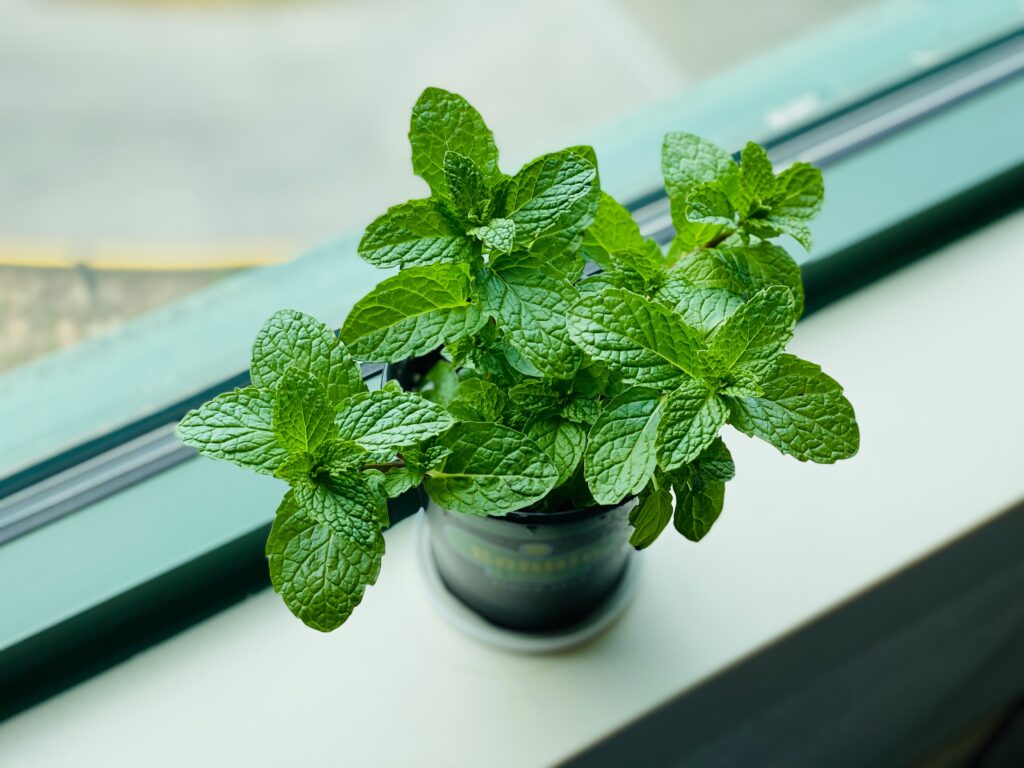
It works by modulating calcium channels in smooth muscle and reducing the intensity of intestinal contractions. It doesn’t shut the gut down but it just turns down the volume on spasms, which can provide a lot of relief!
However, peppermint isn’t always the right choice. If someone has significant acid reflux in their throat or a burning sensation in the chest, peppermint can make that worse because it can relax the lower esophageal sphincter and allow acid to move upward more easily (out of the stomach and into the esophagus).
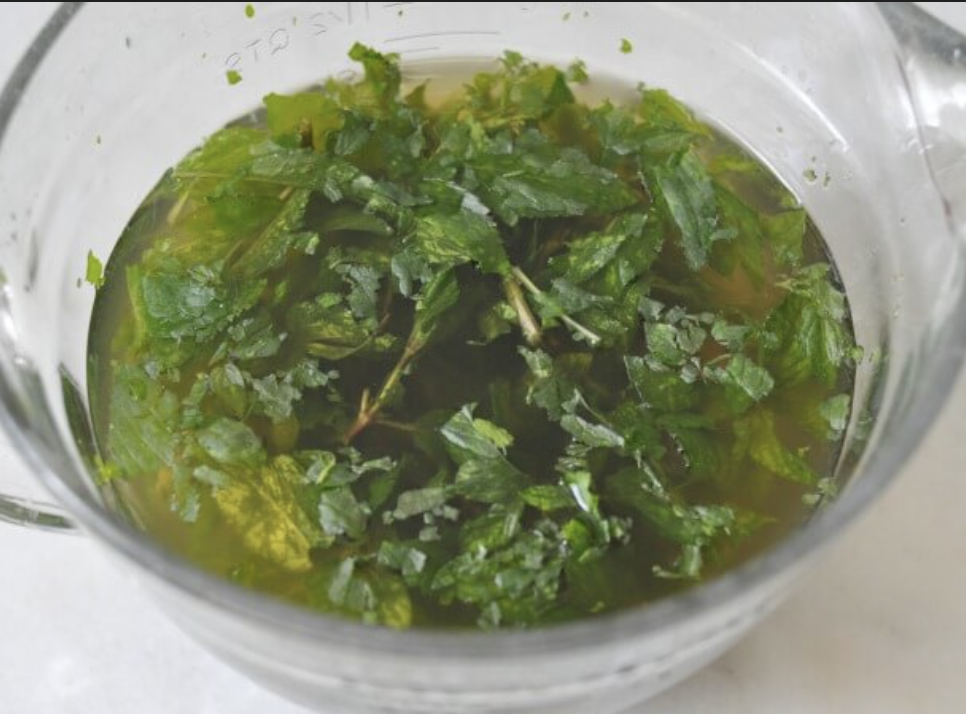
Instructions:
For tea, I pour hot water over one to two teaspoons of dried leaves, or a small handful of fresh leaves, and cover it for ten to fifteen minutes. Covering it while it steeps matters because the volatile oils, which are the medicinal part, can evaporate if left uncovered.
So, peppermint really shines when the problem is spasm more than inflammation.
Peppermint really shines when the problem is spasm more than inflammation.
3. Chamomile: When the Nervous System Is Involved

Chamomile, Matricaria chamomilla, is one of my favorites when emotions are part of the nausea-picture.
If nausea shows up during stress, overwhelm, anxiety, or in children who are emotionally dysregulated and then feel sick to their stomach… chamomile often makes more sense than peppermint.
It relaxes smooth muscle, has mild anti-inflammatory effects, and gently supports GABA signaling in the nervous system. GABA is a calming neurotransmitter. Chamomile’s effect is much weaker than medication, but it’s enough to soften that stress response.
When the sympathetic nervous system is activated, digestion changes. Motility can become irregular. Cramping increases. Nausea becomes more likely. Chamomile helps reduce that overactivation while also calming the gut lining.

Instructions
I usually use one to two tablespoons of dried flowers and steep them, covered, for ten to fifteen minutes. It’s gentler than peppermint and often better when tension and irritability are present.
Chamomile is for those nervous/ anxious tummies.
4. Lemon Balm and Related Calming Herbs

Lemon balm, Melissa officinalis, sits in a similar space. It’s particularly helpful when nausea is paired with anxiety, restlessness, or that gut-brain feeling where everything is unsettled.
Compounds found in lemon balm, and even in plants like citronella, interact with neurotransmitter systems and may influence serotonin signaling more subtly. Similar to ginger’s function of 5-HT3 receptors. But, while lemon balm doesn’t block the nausea reflex the way ginger does, it steadies the nervous system and supports the terrain.
It’s often a good addition when there is viral fatigue, emotional stress, or ongoing gut-brain dysregulation.

5. After Vomiting: Protecting Irritated Tissue
Once vomiting has slowed, marshmallow root can be helpful if the throat or esophagus feels raw and irritated.
Instructions:
A cold infusion works best. I add one tablespoon of dried marshmallow root to room temperature water and let it sit for four to eight hours, then strain and sip. It coats and protects irritated tissues rather than changing motility or signaling.
When Nothing Is Staying Down
If someone is actively vomiting and can’t keep fluids down at all, the priority is TINY amounts of fluid at very frequent intervals. About a teaspoon every five to ten minutes is often better tolerated than larger sips.
Inhaling peppermint or ginger essential oil may still slightly reduce nausea perception, but it does not treat dehydration and it won’t stop a viral cascade. It can be supportive, but it isn’t the main treatment.
The textbook says that room temperature liquids and minimizing strong smells can also make a difference. (Although, when I am personally nauseous, I always prefer cold liquids).

Quick Helpful List:
- Ginger is for when the nausea signal itself is strong and active.
- Peppermint is for cramping and spasm.
- Chamomile is for cramping with a nervous system component.
- Lemon balm is for stress-related gut disruption.
- Marshmallow is for soothing irritated tissue afterward.
When you match the herb to what’s actually happening physiologically, they tend to work much more reliably. And that feels less like guessing and more like caring for the body in a thoughtful, informed way.
Feel better!
❤️ Rachel
More science:
GINGER Mechanism & Antiemetic Action
5-HT₃ Receptor Interaction Studies
- Ginger and its pungent constituents non-competitively inhibit activation of human 5-HT₃ receptors of enteric neurons. Shows that ginger extracts and key compounds inhibit 5-HT₃ receptor activation in human neurons, a mechanism related to its anti-nausea effects.
PMID: 23490018 - Effects of ginger constituents on the gastrointestinal tract: role of cholinergic M3 and serotonergic 5-HT₃ and 5-HT₄ receptors. Explores how ginger compounds interact with 5-HT₃ and other receptors involved in gut motility and nausea.
PMID: 21305447
Clinical/Systematic Evidence
- Medicinal plants for chemotherapy-induced nausea and vomiting: a systematic review. Summarizes evidence that ginger (gingerols, shogaols) may act via 5-HT₃ receptor modulation and other pathways to relieve nausea.
PMID: 40771488
PEPPERMINT Aromatherapy & Smooth Muscle Effects
Aromatherapy Clinical Trial
- Effect of aromatherapy with peppermint, ginger, and lavender on postoperative nausea severity. A randomized trial showing that inhalation aromatherapy including peppermint significantly reduced nausea severity after surgery.
PMID: 40154579
Mechanistic Study
- Mode of action of peppermint oil and (-)-menthol with respect to 5-HT₃ receptor subtypes. Demonstrates that peppermint oil and menthol inhibit 5-HT₃ receptor channel activity in vitro, supporting a potential anti-nausea mechanism.
PMID: 21077259
(Note: there are no large clinical trials on peppermint alone for nausea in PubMed, but peppermint’s smooth-muscle effects and some aromatherapy trials support its use.)
CHAMOMILE Clinical & Supportive Evidence
Clinical Trial Evidence
- Effectiveness of chamomile in reducing nausea and vomiting after surgery. A clinical trial showing that chamomile reduced nausea severity four hours after middle ear surgery.
PMID: 40092536 - Effect of ginger and chamomile on nausea and vomiting caused by chemotherapy. A randomized trial showing both ginger and chamomile reduced vomiting frequency in women undergoing chemotherapy.
PMID: 27644672
Supporting Review
- Chamomile (Matricaria chamomilla L.): a review of effects including nausea/vomiting. A broad review covering bioactive components and clinical uses, including supportive evidence for nausea/vomiting relief.
LEMON BALM Calming & Digestive Support
While PubMed evidence specific to lemon balm and nausea is limited, there are systematic and pharmacological reviews supporting its calming and digestive role:
- Clinical efficacy and tolerability of lemon balm (Melissa officinalis). Review of lemon balm’s calming properties and broader system effects on anxiety and nervous system tone, which often influences nausea.
PMCID: PMC11510126 - Effectiveness of lemon balm for anxiety and mood (systematic). A clinical review suggesting lemon balm may improve anxiety symptoms, indirectly supporting its use for stress-related nausea.
PMID: 34449930 - Lemon balm basal and spasmolytic effects on GI tract. An animal/experimental study showing lemon balm extract affects GI contractility, which can relate to digestive comfort.
PMCID: PMC6653806