Edit: By popular demand, here are some exact recipes for Coconut Oil Soap, Olive Oil Soap, and Lard or Tallow Soap. You can also find the Simple 3-Ingredient Castile Soap Recipe here.
Intro
The blog-making rules are that I am supposed to begin this with my entire history of making soap and how my great-grandmother taught me in her Appalachian cabin when I was a wee little girl.. etc etc. That is not true. I learned how to make soap 4 years ago because I’m sick of “green” brands at the store either charging a fortune for soap or selling out and using crappy ingredients. That’s all.
So here is the way I make soap. It is not fancy. It is not really pretty. But it is practical and cheap. Here you go:
Bar Soap Recipe
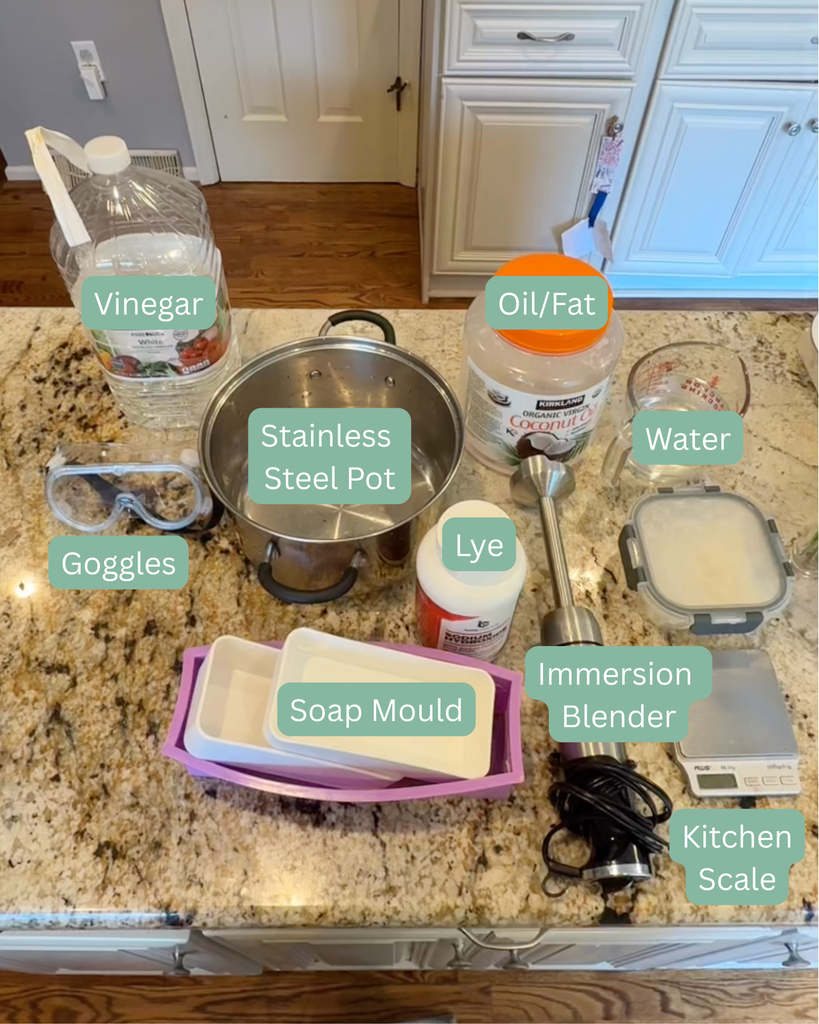
Materials
- Vinegar
- Eye protection
- Stainless steel pot or bowl
- Immersion blender
- Kitchen scale
- Soap mold
Ingredients**
- 8oz filtered water
- 22oz oil/fat
- 2.8oz lye
Instructions
- Melt and measure out whatever fat or oil you are using (under 120 degrees)
- You do not have to do this if your oil is already a liquid
- Set fat/oil aside
- Pour 8oz water into pot
- Tap water is fine as long as it’s not “hard” water.
- Pour 2.8oz lye into water and stir to combine
- Go slowly, *don’t put your face directly over pot, fumes can be strong*
- Pour 22oz melted fat/oil into pot and begin immersion blending
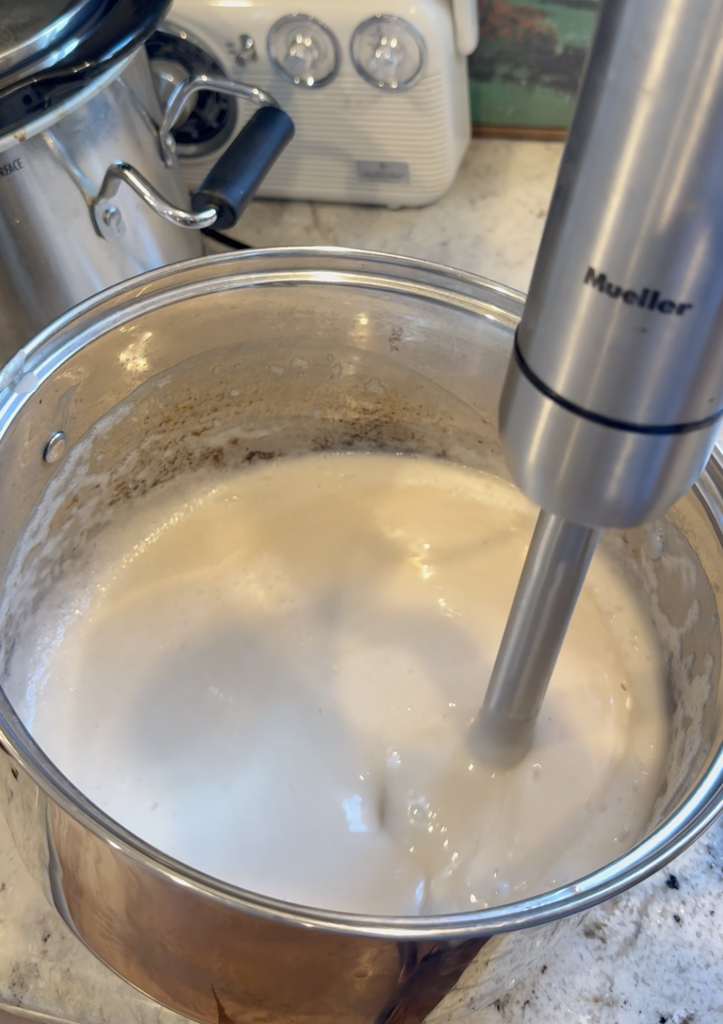
- Keep stirring/blending until you get trace (pudding consistency)
- Pour soap mix it into soap mold
- Let cure for 1-2 weeks to solidify before cutting
- Then cure cut soap for 1-2 more weeks before using (do zap test)
**What Kind of Oil/Fat Should You Use
I do not use a soap calculator. You can if you want to. You are “supposed” to recalculate your lye/fat ratio based on the different kinds of oils and fats because they all have different “saponification” ratios. This means that each fat absorbs the lye in different amounts.
I have used this exact same recipe (8oz water, 22oz fat/oil, 2.8oz lye) for every kind of fat or oil I’ve had on hand: lard, tallow, olive oil, castor oil, coconut oil, etc. And I combine them in random amounts until I reach the 22oz needed for my recipe. All of my soap has turned out just fine. Lathering and cleaning and great. 🤷🏼♀️
So, if you want the *perfect* bar of soap that turns out the same every single time, use a soap calculator and put in the kind of oil you plan on using. It will give you the exact amount of lye you should use.
I am a simple woman, and I have this recipe memorized, so I will not depart from it.
What is Superfat?
If you do stumble upon a soap calculator, it will ask you what you want your “superfat” perfentage to be. This is simply the extra, unreacted oil or fat left in a finished bar of soap after the chemical conversion process of saponification.
In other words: you combined LYE with FAT. Probably 95% of that fat mixed with the lye and went through the chemical reaction of “saponification” – which means it turned to literal soap. That means 5% of that FAT was left over and stayed as fat. Which helps with moisterizing skin and such.
How much Superfat do you want in a bar of soap?
Usually between 5%-15%, depending on your fat. A 0% superfat would be a pretty drying bar of soap. If you use THIS ⬆️ recipe above with either coconut oil, lard, tallow, olive oil, etc. – you will basically always end up with a superfat percentage of about 8%-15%. But that is a big range. So if you really want to have exactness – here is a good soap calculator!
Links for Tools and Supplies
For your convenience, here are the links to all of the tools/supplies I personally use! If you do not want to purchase on Amazon, another option would be to check Facebook Marketplace. Often, people are getting rid of their hobby items right when you are starting, so you can buy a whole bundle of supplies for much cheaper! Worth a check.
Wait I have more questions
There are a bunch of nuanced things about making soap that you can totally learn! This is a very beginner-friendly entry set of instructions so that anyone who wants to begin soap-making (but feels like it’s too complicated) can jump in and start. Go ahead and make a batch and learn more as you go! Just start.
If you have more questions, I think https://www.ellyseveryday.com/ is a really great resource 😊
Happy soap making and remember, all glory to the One who created it all!
❤️ Rachel
Video
Precautions:
- Wear gloves and safety goggles.
- Work in a well-ventilated area.
- Keep children and pets away from lye and lye water.
- Always add lye to water, never water to lye.
- Avoid breathing lye fumes; don’t lean over the mixture.
- Use stainless steel, silicone, or heat-safe plastic.
- Never use aluminum.
- Avoid skin and eye contact with lye or fresh soap batter.
- Keep vinegar or other acids out of the lye-mixing process.
- Clearly label and safely store lye out of reach of children.
- If lye contacts skin, flush immediately with vinegar and then plenty of cool running water.
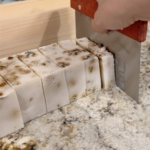
Easy Homemade Bar Soap
Equipment
- Kitchen scale To measure out the ounces
- Stainless Steel Pot I use the same one I cook in… you're making soap and I already use soap to wash my pot
- Immersion Blender You could also just use a spoon to stir but it'd take longer
- Vinegar Just in case of lye spill
- Soap Mould I used dollar store plasic trays until recently
Ingredients
- 8 oz Water Tap water is fine if it's not hard water
- 22 oz Fat or Oil I mostly use lard or olive oil
- 2.8 oz Lye Sodium Hydroxide (NaOH)
Instructions
- Measure out and melt whatever fat or oil you are using (under 120 degrees)You do not have to do this if your oil is already a liquid
- Set fat/oil aside
- Pour 8oz water into potTap water is fine as long as it’s not “hard” water
- Pour 2.8oz lye into water and stir to combineGo slowly, *don’t put your face directly over pot, fumes can be strong*
- Pour 22oz melted oil into pot and begin immersion blending
- Keep stirring/blending until you get trace (pudding consistency)
- Pour soap mix it into soap mold
- Let cure for 1-2 weeks to solidify before cutting
- Then cure cut soap for 1-2 more weeks before using (do zap test)
Notes
- If adding flower petals or peels into soap, please ensure that they are FULLY DRY, otherwise they will mold.
- It is normal for flower petals or peels to bleed color inside the soap. This is a normal chemical reaction.
- If you want to add flower petals but don’t want them to bleed, simply sprinkle them on top of the mold after pouring in the soap.